HS-LS1-2
Develop and use a model to illustrate the hierarchical organization of interacting systems that provide specific functions within multicellular organisms.
- Animals
Among chimpanzees, peeing is contagious
One individual chimpanzee peeing prompts others to follow suit — but scientists don’t know why.
- Brain
Explainer: How our body deals with stress
Our autonomic nervous system balances two natural responses. If stressed or overwhelmed, simple techniques can help to restore that balance.
- Animals
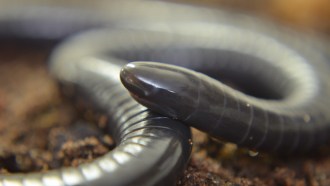
Scientists Say: Caecilian
Some of these amphibians can produce a milk-like liquid for their offspring and give birth to live young. And those aren't the only rules these rebels break.
- Brain
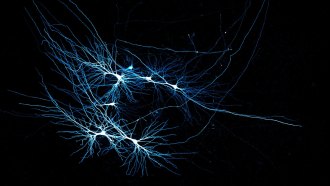
Having sparse links in the hippocampus may maximize memory storage
Tissue from the memory centers of people’s brains reveal relatively few links among nerve cells in the hippocampus. But they carried strong, reliable signals.
- Science & Society
Viewing math as a language might help it make sense to more of us
It might also reduce the anxiety associated with using math, allowing people to better answer a host of important everyday questions.
- Brain
Could the magic of memory manipulation ever become real?
Someday, technology might be able to help people better hold onto memories or forget bad ones.
- Chemistry
Scientists Say: Absorb and Adsorb
These words sound and look a lot alike. But crucial differences lie in how they soak up that spill.
- Health & Medicine
Can you really die of a broken heart?
Death by heartbreak doesn't just happen in stories. In real life, severe stress can cause takotsubo syndrome — a sometimes fatal heart problem.
- Animals
A surprising number of animals eat poop
A new tally finds more than 150 vertebrate species willing to snack on feces. Eating poop offers nutrients and other benefits.
- Brain
Scientists are exploring why some people don’t have a mind’s eye
A researcher with aphantasia is studying how different senses work together in the brain — and when they don’t.
- Brain
Purple exists only in our brains
Most colors represent a single wavelength of light. But your brain invents purple to deal with wavelengths from opposite ends of the visible spectrum.
- Brain
A single sniff is enough to detect slight odor changes
The speed of our ability to perceive odors is on par with that of color perception, a new sniff device shows.