HS-LS2-2
Use mathematical representations to support and revise explanations based on evidence about factors affecting biodiversity and populations in ecosystems of different scales.
- Earth
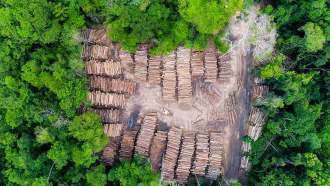
Analyze This: Tropical forests have gotten patchier
Although many of the world's forests have gotten less fragmented since 2000, tropical forests have gotten more chopped up, putting animals at risk.
- Health & Medicine
Doctors found a snake parasite in a woman’s brain — still alive
This worm typically infects pythons. Though this is its first known infection in humans, other types of worms also can infect the human brain.
- Animals
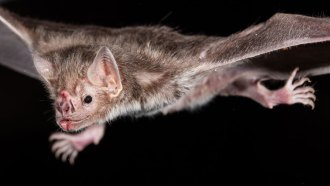
Let’s learn about vampire bats
Vampire bats rarely bite people, instead preferring to feed on animals like cows and horses.
- Animals
This egg-eater may have the biggest gulp of any snake its size
Slither aside, Burmese pythons. This little African snake has a truly outsized swallow.
- Oceans
Summer 2023 is when the ocean first turned ‘hot tub’ hot
Unfortunately, scientists worry that this atypical sea warming may actually be the beginning of an unwelcome new ‘normal.’
- Ecosystems
Scientists Say: Predator and Prey
Ecological relationships between predators and their prey drive the evolution of plants, animals and microbes.
- Tech
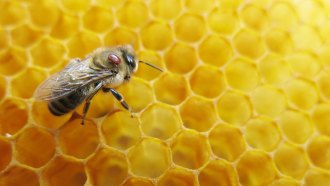
A device spots and counts honeybees hosting a dangerous parasite
At Regeneron ISEF, three teens debuted an infrared system to detect honeybees carrying mites. It can show beekeepers when a colony needs to be treated.
- Fossils
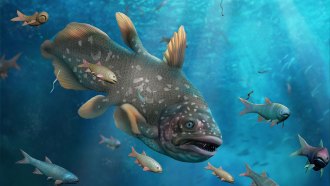
Ocean life may have bounced back after the ‘Great Dying’
Marine ecosystems may have been back in action just a million years after the most severe extinction event known.
- Plants
Mimosa plant ‘muscles’ fold tickled leaves fast
A mimosa plant uses special cells to close leaflets when bumped and then reopen them — again and again.
- Health & Medicine
Explainer: Why it’s easier to get sick in the winter
Low humidity helps viruses survive, and cold weather blunts some of the body’s immune responses — making colds and other viral infections more likely.
- Microbes
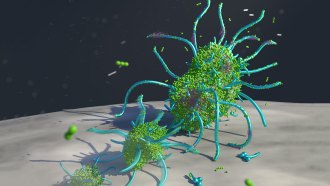
Mouth-crawling superbugs cause severe cavities in kids
In kids with severe tooth decay, fungi and bacteria team up to create superorganisms that can crawl across teeth.
- Environment
Microplastic pollution aids viruses and prolongs their infectivity
The tiny plastic bits give these germs safe havens. That protection seems to increase as the plastic ages and breaks into ever smaller pieces.