HS-LS2-2
Use mathematical representations to support and revise explanations based on evidence about factors affecting biodiversity and populations in ecosystems of different scales.
- Animals
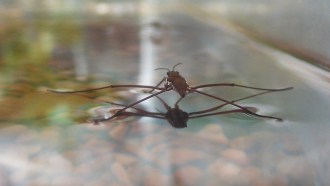
Teen studies water strider disappearing act
As a child, Xidian Zhang loved to play with water striders. Now they’re gone, and pollution may be the reason. This teen’s findings earned him a spot at the 2014 Intel International Science and Engineering Fair.
- Animals
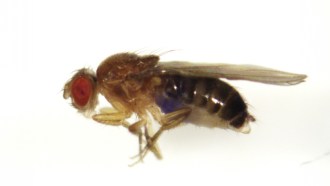
A science fair project makes bug killing sweet
Simon Kaschock-Marenda wanted to see how flies responded to different sweeteners. Along the way, he discovered an insecticide that would pose little risk to people. And the 14-year-old is now a published author on a scientific paper.
- Plants
Taking a long look at lichen
Lichens may not look like much, but they play a vital role in our ecosystems. ISEF finalist Madeline Handley decided learn more about the lichens in her native Alaska.
- Animals
Mosquitoes, be gone!
An extract of local seeds in Puerto Rico may be the key to keeping mosquitoes away. It kills the larval insects and repels the biting adults.
-
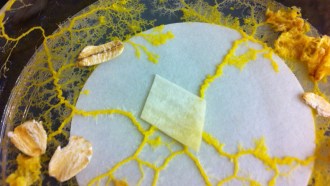
High school student studies slime mold smarts
Are slime molds “smart,” and what does that mean? Hannah McShea ran experiments to find out more about how slime molds behave and what it means for intelligence.
- Microbes
Convincing bacteria they’re alone
Caffeine may be the trick to confusing some bacteria into thinking they’ve not yet summoned enough troops to launch a successful attack on their host. It could prove an alternative to antibiotics for certain infections.
- Animals
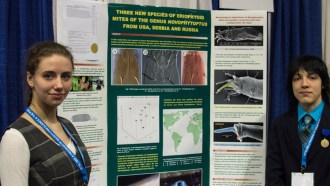
Mite-y discoveries!
Two teens from Russia discovered tiny mites living inside grass-like plants called rushes. Three of the species they turned up are new to science.
- Health & Medicine
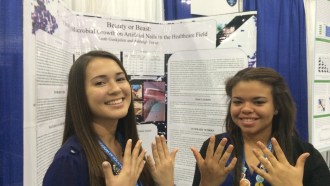
Beautiful nails may harbor germs
Two students wondered why they weren’t allowed to wear fake nails as nursing assistants. They decided to use science to probe why. What they found sent them to the Intel International Science and Engineering Fair.
- Animals
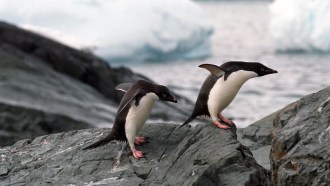
Even penguins get the flu
Scientists have just identified ‘live’ bird flu virus in Antarctic penguins. But the infections may not be novel. There are some signs these germs have been infecting local wildlife for up to 80 years.
-
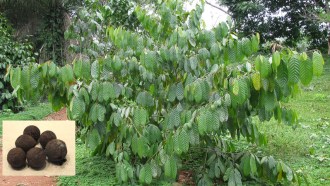
Solving bad breath one walnut at a time
Two teens came up with a cheap and simple solution to halitosis. It’s the African walnut.
- Animals
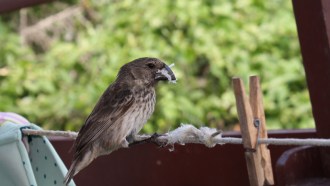
Helping birds doctor their babies
Darwin’s finches will soften their nests by weaving in fibers, such as stray bits of cotton. An observant biologist offered those birds some insecticide-treated cotton and the birds took it, which saved their young from deadly parasites.
- Animals
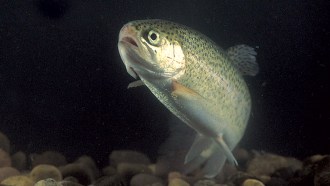
Don’t mess with a frustrated fish
When a trout doesn't get the snack it expected, look out. These fish get aggressive. Sometimes they can defeat even bigger fish.