MS-ESS3-4
Construct an argument supported by evidence for how increases in human population and per-capita consumption of natural resources impact Earth's systems.
- Chemistry
Chemists have unlocked the secrets of long-lasting Roman concrete
By searching ancient texts and ruins, scientists found a concrete recipe that could make buildings stronger — and help address climate change.
- Climate
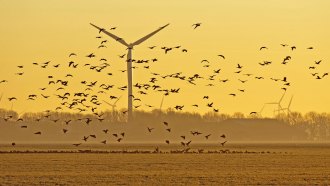
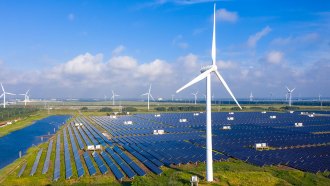
Here’s how to increase clean energy without harming wildlife
Wind farms, solar panels and more take up land and may harm wildlife. Researchers are working to resolve this conflict.
- Materials Science
Let’s learn about piezoelectric materials
Piezoelectric materials turn mechanical energy into electrical energy — and vice versa.
- Archaeology
Carvings on Australia’s boab trees reveal a people’s lost history
Archaeologists and an Aboriginal family are working together to find and document a First Nations group’s lost ties to the land.
- Environment
Protecting forests may help head off future pandemics
Hungry bats are more likely to shed harmful viruses to people or livestock when they spread out to hunt food. Conserving forests may limit this risk.
- Environment
Gas stoves can spew lots of pollution, even when they’re turned off
A new study finds they can leak benzene and other harmful chemicals into homes, sometimes at very high levels.
- Climate
Explainer: What is decarbonization?
Lowering carbon levels in our atmosphere to stabilize the climate may start with switching from fossil fuels to greener energy sources.
- Climate
Green energy is cheaper than fossil fuels, a new study finds
Switching over to clean, renewable power — and away from fossil fuels — could save trillions of dollars by 2050, a new study finds.
- Climate
Greenland’s inland ice is melting far faster than anyone thought
Inland melting of the Northeast Greenland Ice Stream is accelerating — and may contribute far more to sea level rise than earlier estimates suggested.
- Animals
Study finds big drop in animal populations since 1970
But the same thing is not happening throughout the kingdom. For instance, more than half of vertebrate populations are stable or increasing.
- Humans
Eight billion people now live on Earth — a new record
The global population hit this milestone on November 15, according to an estimate from the United Nations.
- Earth
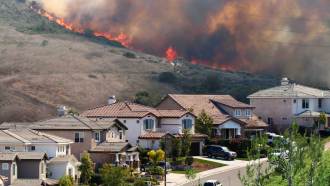
Analyze This: Wildfires are pumping more pollution into U.S. skies
Researchers wanted to study the health effects of wildfire smoke. But they realized they didn’t know where it was and how much exposure people had.