MS-ETS1-1
Define the criteria and constraints of a design problem with sufficient precision to ensure a successful solution, taking into account relevant scientific principles and potential impacts on people and the natural environment that may limit possible solutions.
- Tech
Nanocrystal ‘painted’ films may someday help relieve summer heat
The rainbow palette and cooling powers of new plant-based films comes from their microscopic surface patterns of tiny crystals.
- Tech
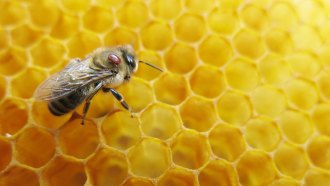
A device spots and counts honeybees hosting a dangerous parasite
At Regeneron ISEF, three teens debuted an infrared system to detect honeybees carrying mites. It can show beekeepers when a colony needs to be treated.
- Health & Medicine
New patch might replace some finger-prick testing of blood sugar
A finalist at Regeneron ISEF created a wearable patch that turns yellow when someone’s blood-sugar level gets high enough to need an insulin shot.
- Humans
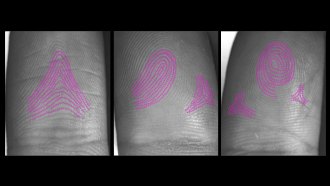
How fingerprints form is no longer a mystery
A mathematical theory proposed in the 1950s helps explain how fingerprint patterns such as arches, loops and whorls arise.
- Tech
Recycling rare-earth elements is hard — but worth it
As demand for these valuable metals has been skyrocketing, scientists have begun inventing new — and greener — ways to reuse what they have in hand.
- Environment
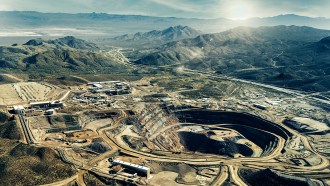
Rare-earth mining is dirty but key to a climate-friendlier future
That’s spurring new research to find a steady but safer supply of these precious metals, including in the United States.
- Tech
A new solar-powered gel purifies water in a flash
The unusual, fruit-inspired structure of this material provides quick filtration that could satisfy people's daily water needs.
- Tech
Magnetic fields melt and re-form new shape-shifting devices
Miniature machines made of gallium and magnetic particles can switch from solid to liquid and back.
- Climate
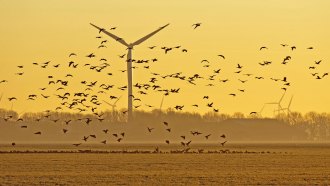
Here’s how to increase clean energy without harming wildlife
Wind farms, solar panels and more take up land and may harm wildlife. Researchers are working to resolve this conflict.
- Tech
Think of this new tech as sunglasses for our windows
Keeping buildings cool can use a lot of energy. Thanks to quantum computing, engineers designed a coating to cut the warming light that enters windows.
- Tech
Can we build Baymax?
Baymax may be science fiction, but soft robotics is not. Experts break down Baymax’s parts and show what’s coming in the future.
- Computing
Sleep helps AI models learn new things without forgetting old ones
Breaks in training meant to mimic human sleep helped artificial intelligence learn multiple tasks.