MS-ETS1-1
Define the criteria and constraints of a design problem with sufficient precision to ensure a successful solution, taking into account relevant scientific principles and potential impacts on people and the natural environment that may limit possible solutions.
- Materials Science
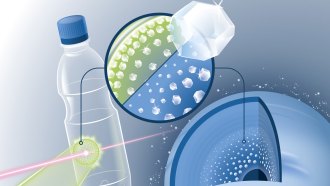
Laser light transformed plastic into tiny diamonds
The technique could be used to make nanodiamonds for quantum devices and other technology.
- Earth
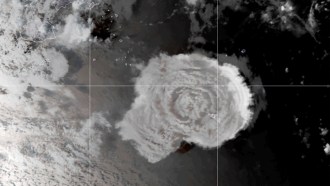
One 2022 tsunami may have been as tall as the Statue of Liberty
A massive volcanic eruption in the South Pacific, earlier this year, appears to have triggered one tsunami that was initially 90 meters (nearly 300 feet) tall.
- Tech
Welcome to the metaverse
The idea of the metaverse comes from science fiction. But technology could make such immersive virtual worlds a reality.
- Health & Medicine
New stick-on ‘sonar’ device lets you watch your own heart beat
This wearable patch might one day make personalized medicine affordable almost anywhere in the world.
- Chemistry
Cool Jobs: Scientific glassblowers shape science
Glass has played a major role in research for centuries. Today’s artisans work at the forefront of discovery.
- Animals
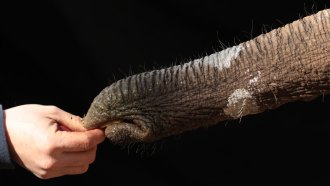
The top side of an elephant’s trunk is surprisingly stretchy
Research on elephant trunks could inspire new artificial skins for soft robots.
- Animals
Like an octopus, this glove lets fingers grip slippery objects
The octopus-inspired suckers on each fingertip grab and release objects on demand.
- Physics
You might someday ‘wallpaper’ your bedroom with this loudspeaker
This thin, flexible and lightweight loudspeaker could reduce noise in loud spaces. It also might enable listeners to experience sound in new ways.
- Tech
Virtual critters evolve bodies that help them learn
A combination of evolution and learning may lead to more intelligent and agile robots.
- Animals
To test for COVID-19, a dog’s nose can match a nose swab
Dogs can sniff out COVID-19 cases as well as PCR tests can — and are better at ID’ing cases having no symptoms, a new study finds.
- Science & Society
Some scientists want serious research into UFOs. Here’s why
Science grapples with unknown phenomena all the time. Investigating “unidentified flying objects” shouldn't be different, researchers say.
- Tech
This robotic finger is covered in living human skin
The advance brings super realistic cyborgs one small step closer to reality.