MS-LS4-1
Analyze and interpret data for patterns in the fossil record that document the existence, diversity, extinction, and change of life forms throughout the history of life on Earth under the assumption that natural laws operate today as in the past.
- Life
Scientists Say: Ichnology
This field of science looks to understand life — past and present — by studying how organisms altered their surroundings.
- Animals
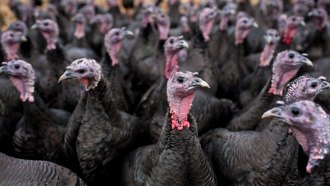
Let’s learn about why turkeys are dinosaurs
Modern birds are the only dinosaurs that survived an apocalyptic extinction event 66 million years ago.
- Humans
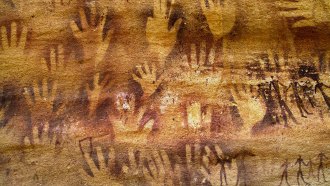
Scientists Say: Prehistoric
Researchers rely on prehistoric tools and other artifacts to study the vast stretches of time before recorded history.
- Animals
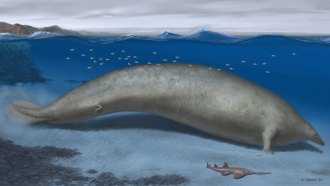
This massive ancient whale may be the heaviest animal ever known
Called Perucetus colossus, it may have tipped the scales at up to 340 metric tons — more than today’s blue whales.
- Archaeology
Let’s learn about Stonehenge
Questions remain about exactly who built Stonehenge and why. But some details are known about the site’s origins.
- Math
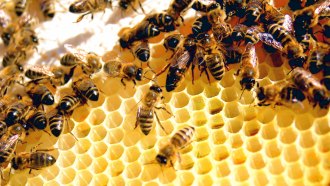
Bees and wasps devised the same clever math trick to build nests
During nest building, these insects add five- and seven-sided cells in pairs. This helps their colony fit together hexagonal cells of different sizes.
- Humans
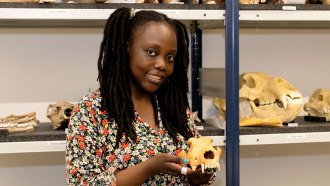
This archeologist reconstructs the past with animal bones
Tagging along with her mom paved the way for her career as an archeologist, Pamela Akuku says. She now studies how ancient humans modified animal bones.
- Oceans
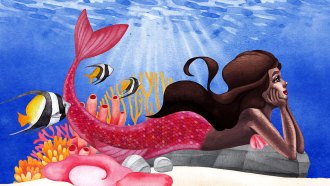
How would a mermaid sound underwater?
Human ears don’t work well in the water. A mermaid would need marine creature features to talk to and understand her aquatic friends.
- Fossils
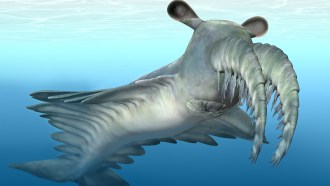
This bizarre ancient predator snagged soft prey
Scientists are rethinking how this extinct creature used the spiky limbs sticking out of its face to hunt.
- Animals
Megalodons may have become megahunters by running hot
O. megalodon sharks were warm-blooded mega-predators. But when food sources dwindled, colder-blooded sharks may have had an evolutionary edge.
- Fossils
T. rex may have hidden its teeth behind lips
Dinosaurs like Tyrannosaurus have long been portrayed with their big teeth bared. But new research suggests this wasn’t so.
- Fossils
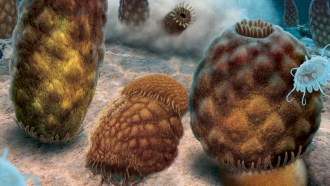
Ancient jellyfish? Upside down this one looks like something else
A new look at an ancient sea animal called Essexella suggests it may have been a type of burrowing sea anemone, not a floating jelly.