MS-LS4-1
Analyze and interpret data for patterns in the fossil record that document the existence, diversity, extinction, and change of life forms throughout the history of life on Earth under the assumption that natural laws operate today as in the past.
- Archaeology
Genetics show humans likely trace back to Africa
Our history began looking ever more complex once geneticists revealed our ancestors picked up new DNA as they traveled across time and continents.
- Agriculture
The ultimate genealogical search hunts for our earliest ancestors
The complex search to identify humans’ most distant cousins is long, complex and far from straightforward. It’s also far from over.
- Animals
Will the woolly mammoth return?
Scientists are using genetic engineering and cloning to try to bring back extinct species or save endangered ones. Here’s how and why.
- Animals
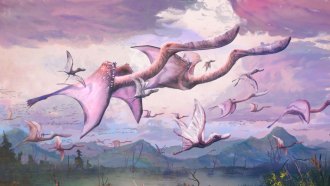
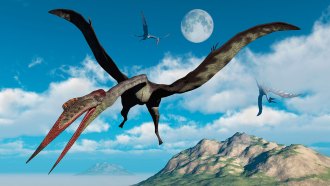
Baby pterosaurs may have been able to fly right after hatching
A bone crucial for lift-off was stronger in hatchling pterosaurs than in adults. The baby reptiles also had shorter, broader wings than grown-ups.
- Earth
New beetle species found in fossil poop of this dino relative
Whole beetles preserved in fossilized reptilian poop suggest that ancient droppings may deserve a closer look.
- Animals
Dinosaur families appear to have lived in the Arctic year-round
Fossils of baby dinosaurs in northern Alaska challenge the idea that northern dinosaurs only spent their summers in the high Arctic.
- Fossils
Ancient creature revealed as lizard, not a teeny dinosaur
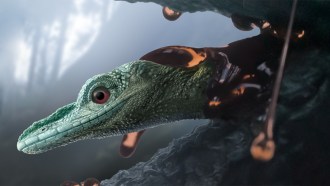
CT scans of 99-million-year-old fossils of hummingbird-sized specimens trapped in amber reveal a number of lizardlike features.
- Archaeology
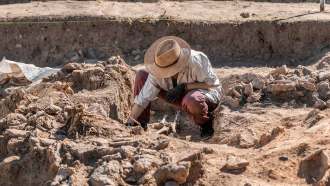
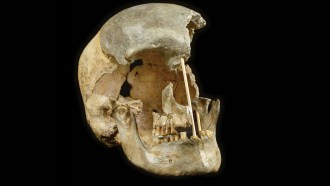
Fossils unearthed in Israel reveal possible new human ancestor
They come from a previously unknown Stone Age group that may represent a complex mashup of early members of our genus Homo.
- Animals
Let’s learn about dinosaurs’ fearsome neighbors
Dinosaurs may get much of our attention, but there were plenty of other interesting critters during the Age of Reptiles, including our mammal ancestors.
- Animals
The secret to T. rex‘s incredible biting force is at last revealed
The force of a T. rex bite was roughly 6 metric tons. A new study points to what’s behind that mighty force.
- Archaeology
Europe’s ancient humans often hooked up with Neandertals
DNA from ancient bones shows humans and Neandertals were regularly mixing genes by about 45,000 years ago.
- Animals
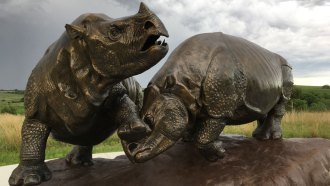
Rhinos, camels and bone-crushing dogs once roamed Nebraska
Scientists digging into the remnants of an ancient watering hole in Nebraska discovered evidence of an Africa-like savanna, complete with rhinos.