MS-PS1-3
Gather and make sense of information to describe that synthetic materials come from natural resources and impact society.
- Chemistry
A soil-based ‘concrete’ could make buildings green, even on Mars
A new soil-based material offers an alternative to concrete for 3-D printing environmentally friendly buildings.
- Chemistry
Flexible devices may help clothes solar power your screens
A fluorescent polymer duo boosts the efficiency of solar cells. One day this material may coat your jacket, hat or backpack to provide power on the go.
- Environment
Why today’s ‘fast fashions’ can be bad for the planet
The constant buy-wear-toss cycle of fast fashion isn’t sustainable. It hurts the environment and takes a toll on our wallets, too.
- Chemistry
Here’s how to make flip-flops biodegradable
Innovative flip-flops made from an algae-based plastic decompose in soil or compost. The comfy shoes also avoid use of fossil fuels.
- Materials Science
This artificial skin feels ‘ghosts’ — things you wish were there
Engineers have developed a wearable device that simulates the sense of touch. It may benefit robotic surgery and deep-sea exploration.
- Chemistry
Ordinary paper turns into flexible human-powered keypad
Engineers have figured out how to turn sheets of paper into rugged, low-cost electronic devices, such as a computer keypad.
- Materials Science
Analyze This: Insect shells could help builders on Mars
When mixed with rocky soil, a compound called chitin makes a strong material. It could be pulled from the shells of insects used for food.
- Animals
Polluting microplastics harm both animals and ecosystems
Researchers are beginning to uncover the real-world impacts of polluting microplastic bits on animals and the ecosystems they inhabit.
- Materials Science
‘Frozen smoke’ could protect electronics from annoying static
A fluffy material made from cellulose nanofibers and silver nanowires can protect electronic devices by blocking more than 99.99 percent of disrupting interference, a new study reveals.
- Environment
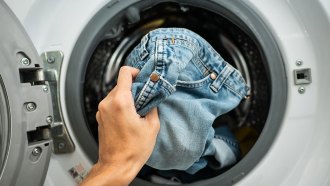
Washing your jeans too much might pose risks to the environment
Jeans shed thousands of denim fibers in every wash. Those fibers, and the chemicals used to treat them, now are showing up in even the Arctic Ocean.
- Climate
Changing climates can take cooling tips from warm regions
When summer heat waves hit northern cities, people might look to keep cool using tropical building strategies — and forgotten architectural wisdom.
- Chemistry
How to recycle ‘nonrecyclable’ plastics
A new process can convert some nonrecyclable plastics into a type that now can be reused. That could greatly cut down on wastes sent to landfills.