MS-PS4-2
Develop and use a model to describe that waves are reflected, absorbed, or transmitted through various materials.
- Physics
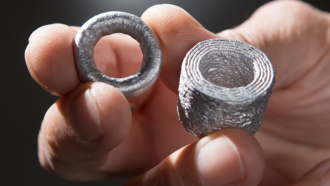
Father and son harness magnetic fields for new type of 3-D printing
A dad and his son have developed a new 3-D printing method in their basement. It harnesses pulsed magnetic fields to build metal objects one tiny aluminum drop at a time.
- Health & Medicine
Umbrella’s shade doesn’t prevent sunburn
Sunblock may be sticky and uncomfortable, but it blocked more of the sun's harmful rays than did an umbrella, a new study found.
- Genetics
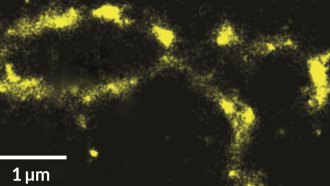
How to view tiny parts of DNA? Make them ‘blink’
A new technique can image nanoscale structures in cells without hurting them. No dyes needed. All you have to do is stimulate them with the right color of light.
- Computing
LEDs offer new way to kill germs in water
Growing ultraviolet-light-emitting diodes on thin, flexible sheets of metal holds promise for water disinfection and other applications.
- Physics
Weird physics warps nearby star’s light
Scientists have observed a bizarre effect of quantum physics in light coming from a nearby neutron star.
- Brain
What makes a pretty face?
Beautiful faces are symmetrical and average. Do we prefer them because this makes them easier for our brains to process?
- Health & Medicine
Simpler way to screen for hidden hearing loss?
Many teens today walk around with undiagnosed hearing damage. But some Boston-based researchers have come up with a low-tech approach to screening these individuals so they can get help.
- Health & Medicine
‘Ringing’ in the ears may signal serious ear damage
A persistent ringing in the ears, also known as tinnitus, has become common in teens — and may point to eventual, permanent hearing loss.
- Physics
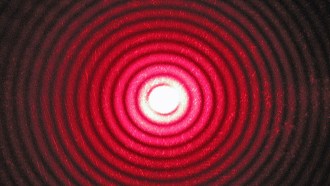
Scientists Say: Diffraction
When liquid hits something it spatters, when light hits something, it scatters. The process is called diffraction.
- Animals
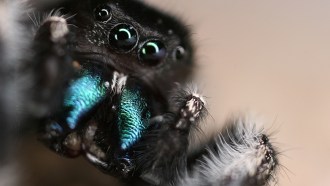
Spidey sense: They can hear you!
Surprise! At least some spiders can hear us. Even without eardrums, jumping spiders can still detect airborne sounds from across the room.
- Tech
Hot, hot, hot? New fabric could help you stay cool
A plastic fabric can let body heat escape efficiently, if the material is filled with tiny bubbles of just the right size
- Animals
Got milk? Roach milk could be a new superfood
Scientists have just figured out the recipe for cockroach milk. And that could be a first step toward making it part of the human diet. Yum!