Waves and Their Applications in Technologies for Information Transfer
- Brain
Cool Jobs: Video game creators
Meet an engineer who worked on StarCraft II, an expert building a new kind of reality and a neuroscientist who uses games as brain therapy.
- Physics
Explainer: How heat moves
Energy moves through the universe one of three ways: conduction, convection and radiation. Only radiation can occur through empty space.
- Tech
Hot, hot, hot? New fabric could help you stay cool
A plastic fabric can let body heat escape efficiently, if the material is filled with tiny bubbles of just the right size
- Health & Medicine
‘Smart’ sutures monitor healing
Coatings added to the threads used to stitch up a wound let researchers use electrical signals to monitor a wound’s healing — even one covered by a bandage.
- Brain
Our eyes can see single specks of light
The human eye can detect a single photon. This discovery answers questions about how sensitive our eyes are. It hints at the possibility of using our eyes to study issues of quantum-scale physics.
- Planets
Jupiter’s Great Red Spot is really, really hot
The Great Red Spot, a storm churning on Jupiter for at least 150 years, may be helping to keep the planet warm, a new study finds.
- Health & Medicine
Nano medicines take aim at big diseases
Nanomedicines are new treatments and tools that are taking aim at disease from the cellular level. Medicine’s next big thing could be very teeny tiny.
- Animals
Got milk? Roach milk could be a new superfood
Scientists have just figured out the recipe for cockroach milk. And that could be a first step toward making it part of the human diet. Yum!
- Health & Medicine
New study raises questions about cell phone safety
U.S. government study in rats links cell-phone radiation to a small increase in brain cancers and heart tumors. Some scientists now worry about lifetime risks to today’s children and teens.
- Physics
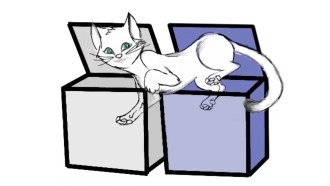
Famous physics cat now alive, dead and in two boxes at once
Splitting Erwin Schrödinger’s famous — and fictitious — cat between two boxes brings scientists one step closer to building quantum computers from microwaves.
- Planets
The ultimate getaway — visiting the Red Planet
At a recent summit, experts discussed the challenges of a human mission to Mars — and how to land a crew there within 20 years.
- Physics
Spinning black holes may ‘sing’ during a collision
The massive black hole in the movie Interstellar would create a unique gravity-wave signal when gobbling a smaller partner.