Brain
And the science Nobels for 2026 go to …
Top prizes went for an icy window into the cosmos, a light switch for the brain and solving the mystery of mirror image molecules.
By Nikk Ogasa
New sensors can map infrasound — a deep-bass thrumming lower than what human ears can hear — emitted by a fire as its flames spread.
People exposed to low infrasound frequencies had higher levels of a stress hormone in spit and were more likely to rate music as sad.
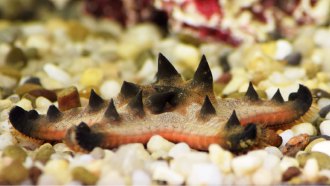
The tiny cone-shaped structures in arms of chocolate-chip sea stars also triple their skeleton’s strength.
Crystals beneath the skin of nudibranchs, also called sea slugs, allow the creatures to make an array of intense hues with just one material.
Professor and pro surfer Cliff Kapono studies human-ocean interactions through the lens of a surfer, from molecular to macro scales.
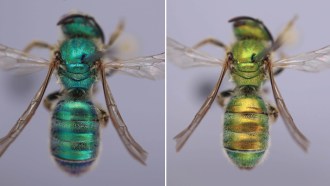
Humidity makes North American sweat bees change color. This trait could be widespread among shiny insects, some biologists now suspect.
As expert echolocators make multiple clicking sounds, their brains process the echoes to help them perceive their surroundings.
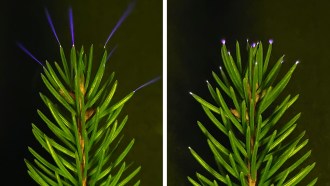
The tiny, storm-driven electric zaps dance and jump around pine needles and other leaves. Videos have just captured that subtle flickering in forests.
All living things glow with this mysterious light. But scientists need ultra-sensitive tools to detect it.