Waves and Their Applications in Technologies for Information Transfer
- Chemistry
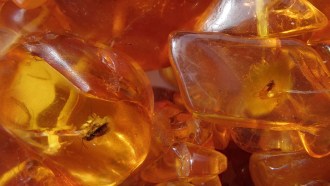
Identifying ancient trees from their amber
A Swedish teen’s analyses of a sample of amber may have uncovered a previously unknown type of ancient tree.
- Earth
Cool Jobs: Getting to know volcanoes
It’s too hot to explore the insides of a volcano. These scientists examine their lava, their low-frequency rumblings and their ‘vog’.
- Computing
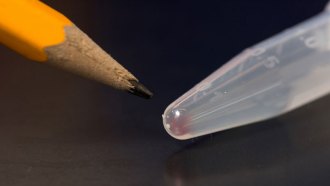
DNA can now store images, video and other types of data
Tiny test tubes might one day replace sprawling data-storage centers, thanks to a new way to encode and retrieve information on strands of synthetic DNA.
- Brain
Headed to a concert this summer? Pack earplugs
Wearing earplugs at concerts and other loud events may prevent hearing loss and permanent ear damage, a new study suggests.
- Brain
Explainer: When loud becomes dangerous
Many people don’t realize that sounds — even those of the music they love — can prove harmful when they get too loud.
- Materials Science
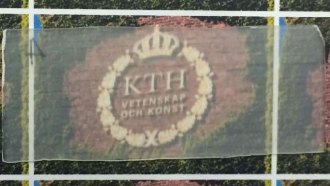
How to make window ‘glass’ from wood
Scientists have come up with a way to make wood transparent. The new material could be used in everything from windows to packaging.
- Physics
Scientists Say: Frequency
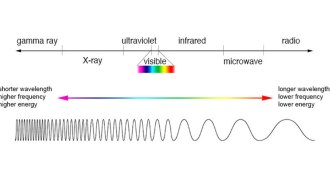
The distance between one wave peak and another is wavelength. But how fast those peaks are moving along is frequency.
- Space
Hurricane at this galaxy’s center is wicked fast
The gale-force winds around one quasar whip by at almost 200 million kilometers per hour. That’s 625,000 times faster than the strongest hurricanes on Earth.
- Materials Science
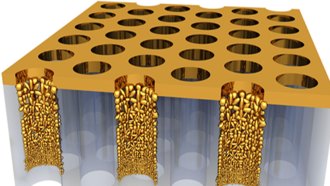
Sunlight + gold = steaming water (no boiling needed)
Nano-gold is the new black, at least when it comes to absorbing heat. When tiny gold particles get together, they become energy super-absorbers — turning them black.
- Earth
Cool Jobs: Mapping the unknown
Scientists find different ways of exploring places humans will never visit — and drawing maps to help us better understand such mysterious places.
- Computing
Feeling objects that aren’t there
A new technology uses high-frequency sound waves to create virtual objects you can feel. Its uses include better video games and safer driving.
- Physics
Scientists Say: Wavelength
When something travels as a wave — such as light — scientists can measure it by its wavelength, the distances between the peaks.