Animals
- Animals
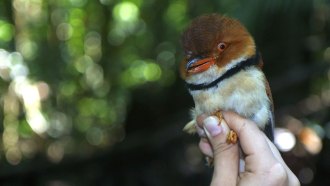
As the tropics warm, some birds are shrinking
Migratory birds are getting smaller as temperatures climb, studies had showed. New evidence shows dozens of tropical, nonmigratory species are, too.
- Animals
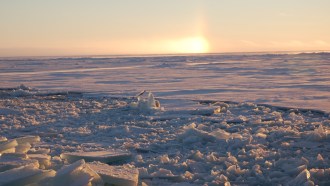
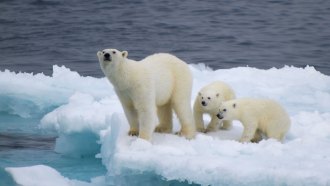
Can scientists develop an icy sanctuary for Arctic life?
The final refuge for summer sea ice may also protect the creatures that depend on it. Saving it is an ambitious goal with many hurdles.
- Animals
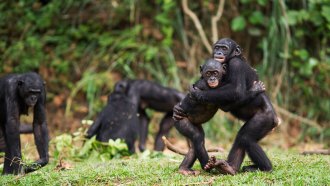
Let’s learn about chimpanzees and bonobos
Humankind’s closest cousins in the animal kingdom may look similar, but in terms of behavior, they’re polar opposites.
- Animals
Scientists Say: Adaptation
This word refers to a feature of a living thing that helps it better survive in its environment — or the process of that feature evolving in a population.
- Animals
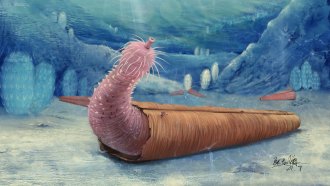
‘Penis worms’ could have been the original hermits
These soft-bodied critters lived in abandoned shells about 500 million years ago, a new study suggests.
- Animals
A panda stands out at the zoo but blends in the wild
A panda may stand out among bamboo at the zoo, but in the wild, its black-and-white coloring camouflages it from predators. Learn more with this web comic.
- Animals
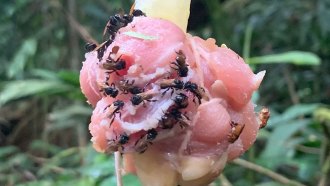
Meat-eating bees have something in common with vultures
Flesh-eating bees have acid-producing gut bacteria, much as vultures do. It lets them safely snack on rotting meat.
- Animals
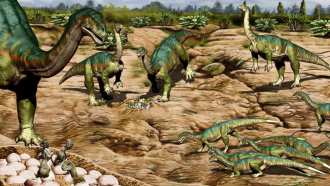
Fossils point to earliest dinosaurs that lived in herds
A fossilized family gathering of long-necked Mussaurus from 193 million years ago is the earliest evidence yet of herd behavior in dinos.
- Animals
Explainer: The age of dinosaurs
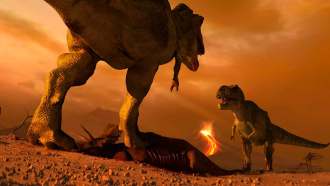
Take a trip back to the Mesozoic Era to explore how geologic events, ecosystems and evolution were connected during the so-called age of dinosaurs.
- Agriculture
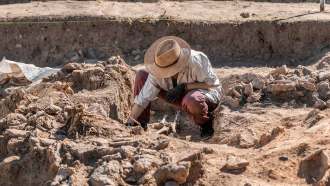
The ultimate genealogical search hunts for our earliest ancestors
The complex search to identify humans’ most distant cousins is long, complex and far from straightforward. It’s also far from over.
- Animals
Baleen whales eat — and poop — a lot more than we thought
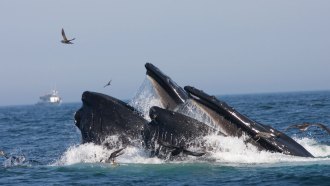
The amount of food that some whales eat and then poop out suggests these animals have a powerful influence over ocean ecosystems.
- Animals
Here’s why ducklings swim in a row behind mom
Baby ducks save energy by surfing their mother’s waves, but only if they do it in an orderly line.