Animals
- Animals
Cool Jobs: Linking animal health to human health
Scientists who watch out for diseases in wild animals also can play a role in keeping people from getting sick.
- Animals
Beetles offer people lessons in moisture control
Taking tricks from a beetle, researchers are designing surfaces that collect water from the air or resist frost buildup.
- Animals
Got milk? Roach milk could be a new superfood
Scientists have just figured out the recipe for cockroach milk. And that could be a first step toward making it part of the human diet. Yum!
- Animals
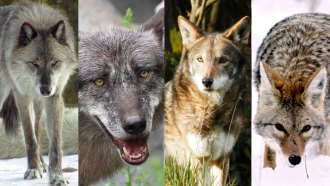
Wolf species shake-up
A genetic study says red wolves and eastern wolves may really be mixtures of coyotes and gray wolves, not distinct species.
- Animals
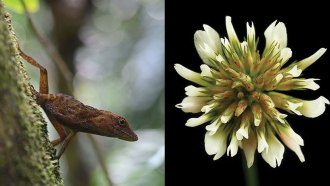
Plants, animals adapt to city living
Cities have turned into experiments in evolution for both plants and animals, from the taste of clover to the stickiness of lizards’ toes.
- Animals
End of Latin America’s Zika epidemic is in sight
A computer simulation suggests the Zika epidemic in Latin America is peaking and may not strike hard again for up to three decades.
- Animals
GM mosquitoes cut rate of viral disease in Brazil
Adults males carrying the altered gene cannot father young that survive to adulthood. That’s when they suck blood — and can transmit disease.
- Animals
Scientists Say: Crepuscular
Day creatures are diurnal. Night creatures are nocturnal. Animals active at twilight get a special name.
- Animals
Frigate birds spend months without landing
Frigate birds can fly non-stop for months. They stay in the air with the help of upward-moving airflows, a new study finds.
- Animals
Scientists Say: Venomous
A poison-arrow frog is poisonous, but a rattlesnake is not. What’s the difference? It’s how their poisons are delivered.
- Animals
Current coral bleaching event is the longest known
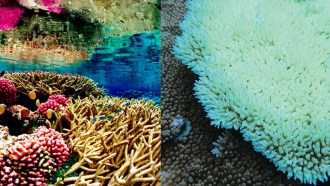
Heat stress has led to the longest coral bleaching event on record. Scientists now worry that global warming may make such prolonged crises more frequent.
- Animals
This mammal has the world’s slowest metabolism
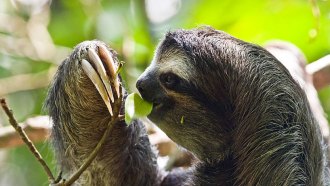
A sloth species manages to exist with a super-slow metabolism by moving little and using its environment for heating and cooling its body.