Brain
- Health & Medicine
The media’s dangerous influence on body image
A study found how powerful TV and ad messages can be in distorting the attitudes about body image among young girls in Fiji.
- Brain
Mistakes: A key to learning
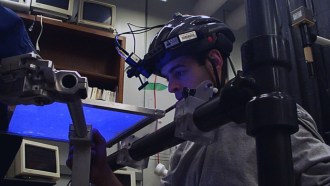
This man uses a robotic arm to move a cursor across a computer screen. The screen blocks his view of his hand and arm. This focuses his attention on any errors he makes as he tries to move a cursor to a target location.
- Brain
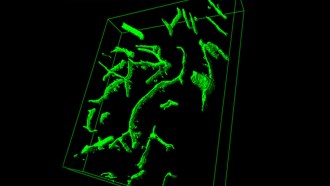
Learning rewires the brain
Brain cells actually change shape as we learn. It’s one way we cement new knowledge. And much of the action happens as we sleep.
- Brain
Lacrosse: Different genders, same injuries
Scientists find that boys’ and girls’ versions of lacrosse lead to similar injuries. Because girls frequently get concussions, the study argues that like the boys, girls too should wear helmets.
- Brain
Choosing shocks over contemplation
Some people think being alone is unpleasant. In one new study, some found choosing to get a painful shock helped them endure being alone for 15 minutes.
- Animals
Bugs may have made us brainy
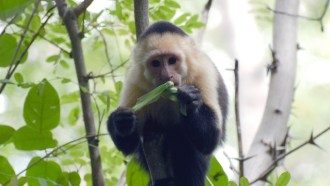
Finding and eating bugs when other food was scarce helped primates — including our ancestors — evolve bigger and better brains. At least that’s the conclusion of a new study in Costa Rica.
- Health & Medicine
Young blood: The elixir of youth?
Old mice show improved memory when blood from young mice circulated through their brains, a new study finds. Other studies suggest one ingredient in that young blood might be all it takes to deliver benefits.
- Brain
Hunger’s little helpers
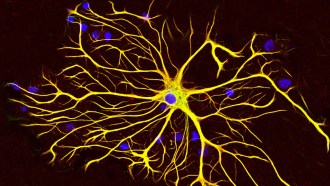
Astrocytes were thought to be nothing more than support cells for neighboring nerve cells. A new study suggests they do much more. These brain cells may help control appetite, too.
- Brain
Football hits the brain hard
The brain’s hippocampus helps store memories. It is smaller in college football players — especially if they have suffered concussions.
- Brain
The scent of a woman — or a man
Animals unwittingly signal things about themselves by giving off subtle scents. A new study claims the same is true for people.
- Brain
Ghosts in your head
Many people see, feel and hear things that aren’t really there — despite how much their brain tries to convince them otherwise.
- Brain
Loneliness can breed disease
Everyone experiences loneliness from time to time. But when allowed to persist, loneliness can damage your health and steal years from your life.