Earth
- Climate
Oceans’ fever means fewer fish
Warming oceans have caused fish populations to plummet since 1930. In some regions, the number of fish that can be caught without depleting populations has dropped by more than one-third.
- Climate
Using art to show the threat of climate change
Climate change can sometimes seem like a huge pile of hard-to-grasp numbers and graphs. These artists are finding new ways to help people understand big changes.
- Animals
Life on Earth is mostly green
A new survey of life on Earth finds that plants and microbes dominate. But even though humans are in the minority, they still play a major role.
- Climate
Thunderstorms hold stunningly high voltage
By studying particles called muons, scientists found that the electric potential inside a thunderstorm may be 10 times higher than previously thought.
- Earth
Scientists Say: Geyser
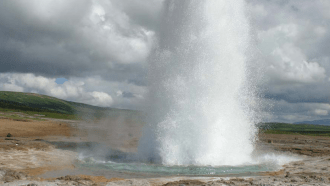
Geysers are underground springs with vents to the surface. When the water gets heated from nearby magma, the geyser blows.
- Chemistry
Why we should stop ignoring the life stories of minerals
All pure diamonds are the same mineral. But they didn’t form the same way. One scientist thinks it’s time to talk about the life stories of such rocks.
- Climate
Disappearing sea ice could disrupt Arctic’s food web
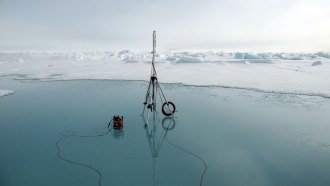
When sea ice goes missing in the Arctic, every part of the ecosystem feels the effects.
- Climate
These teens have some ideas for stopping climate change
If you could do one thing to stop climate change, what would it be? We asked some of the finalists at the 2019 Regeneron Science Talent Search.
- Climate
Wet and wild 2018 is officially fourth-hottest year
Record rains and heat ravaged different parts of the world in 2018.
- Science & Society
Students strike to spur adults into climate action
Students worldwide are demanding action on climate change. Coordinated school strikes were slated to take place around the world on March 15.
- Climate
Scientists Say: Waterspout
A whirlwind over land is just a whirlwind. But over water, a whirlwind becomes a waterspout.
- Earth
Earth’s core may have hardened just in time to save planet’s magnetic field
Earth’s inner core began to solidify within the past 565 million years, a study finds. That could explain why the planet’s magnetic field did not collapse.