Life
- Agriculture
Honeybees fend off deadly hornets by decorating hives with poop
Bees usually collect pollen and nectar. Scientists were surprised to find that Asian honeybees also gather animal dung to defend their hives.
- Animals
Explainer: Insects, arachnids and other arthropods
Arthropods are all around us, but identifying them can be hard. To start, look at the four main groups: chelicera, crustaceans, myriapods and insects.
- Chemistry
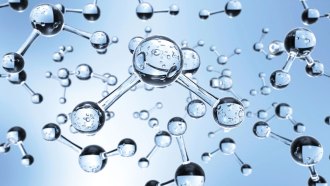
Scientists Say: Molecule
A molecule is a group of atoms linked with chemical bonds. It’s the smallest particle of a substance that has all of its chemical properties.
- Agriculture
Dew collector brings water to thirsty plants
This invention grabs water from the air at night. All it needs is the sun’s warmth the next day to release that moisture to growing plants.
- Animals
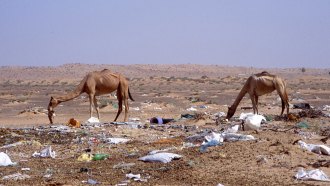
Camels have been dying after mistaking plastic for food
Plastic waste has been building up in the guts of some camels. It may now be killing off one percent of them in the United Arab Emirates each year.
- Animals
Africa’s poisonous rats are surprisingly social
Scientists confirm that the African crested rat can safely cover itself in poison and also find that the rodents may live in pairs — or even family groups.
- Brain
Loneliness makes our brains crave people
An area of the brain that lights up when hungry people see food also revs up when lonely people see social activities.
- Brain
A taste map in the brain is a scattering of tiny flavor islands
Some senses are highly organized in the brain. Taste is not. And that points to just how important it is.
- Animals
Touching allows octopuses to pre-taste their food
Special sensory cells in their arms’ suckers sense chemicals. Those cells allow them to taste the difference between food and poison.
- Animals
Utah mink is first known case of the coronavirus in a wild animal
A wild mink appears to have picked up the novel coronavirus from farmed animals. Such spread in the wild does not appear common.
- Animals
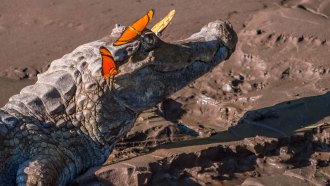
Scientists Say: Lachryphagy
Some insects land on the eyeballs of larger animals. They are seeking out the salt and proteins in the animal’s tears.
- Animals
Let’s learn about sharks
This ancient group of fish can use scent and even electricity to detect their prey. And they fill an important niche in the ocean.