Life
- Genetics
DNA reveals the origin of East Asia’s favorite sweet bean
Where those red beans — also called adzuki — came from had been murky. A new study says it all started in Japan.
- Fossils
New clues about dino speed come from birds strutting through mud
Fossilized footprints can help calculate how fast dinosaurs moved. But tests with guinea fowl show that past estimates might not be right.
- Life
Fungi have been ‘zombifying’ insects for 99 million years
Two bits of ancient amber sitting in a lab basement hold evidence of a fungus that’s become famous for controlling the minds of its victims.
- Animals
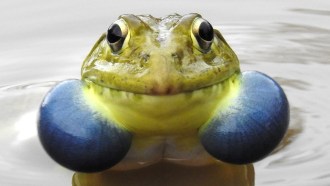
Frogs evolved a wide variety of vocal sacs to amplify their ribbits
Maybe you've seen frogs with ballooning throats, but what about pop-out poofs and fat ear bumps?
- Animals
Scientists Say: Kleptopredation
It’s a hunter-eat-hunter world out there, and this feeding strategy gives some double-dipping predators a competitive edge.
- Animals
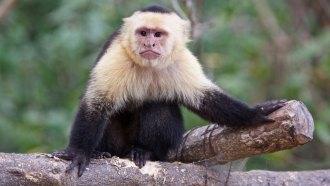
Young capuchins are kidnapping baby howler monkeys
The disturbing habit has emerged among capuchin monkeys on a remote island off Panama. Scientists are baffled — and concerned.
- Fossils
North American rhinos once gathered in large, hippo-like herds
The stumpy-legged rhinos survived until about 12 million years ago, when a supervolcano’s ashfall smothered their world.
- Health & Medicine
Multiple-snake antivenom comes from blood of man bitten 202 times
Tim Friede built immunity to snake venoms through bites and venom injections. His blood proteins now offer antivenom protection against 13 types of snakes.
- Chemistry
Scientists Say: Lipid
These oily, water-repelling molecules knit together, forming the membranes that sustain life.
- Animals
Loss inspired this biologist to study aging
Juan Manuel Vazquez studies the anti-aging genes that have allowed some animals to evolve to live remarkably long lives.
- Genetics
Orange cats get their ginger color from a single gene ‘cutout’
The variant gene is found on the X chromosome. This sex-linked trait for orange fur is found only in domesticated cats.
- Plants
Pollinators send out good vibrations — and plants respond sweetly
Snapdragon blooms can distinguish between the sounds of pollinators and thieves. They boost or drop the sugar in their nectar depending who’s arriving.