Materials Science
- Materials Science
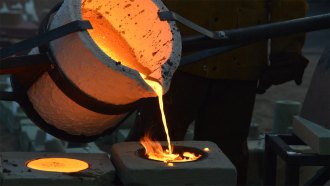
Let’s learn about glass
Unlike the atoms in other solids, the atoms in glass don’t exist in an orderly crystal structure. They’re more jumbled up, like the atoms inside liquids.
- Tech
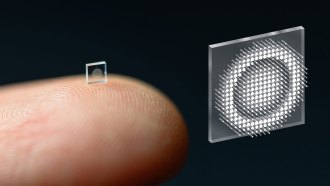
This crumb-sized camera uses artificial intelligence to get big results
Researchers have developed a camera the size of a coarse grain of salt that takes amazingly clear photos.
- Chemistry
Explainer: What is a metal?
Metals can bend and pull without snapping, and conduct electricity. The reason: Their atoms tend to lose electrons to neighboring atoms.
- Materials Science
Analyze This: This material for 3-D printing is made by microbes
Bacteria with tweaked genes pump out proteins that can be used in a 3-D printer. With microbes in the mix, the living ink can make drugs or suck up chemicals.
- Chemistry
Could reusable ‘jelly ice’ cubes replace regular ice?
These hydrogel “jelly ice cubes” are made mostly of gelatin and water. They won’t melt, even when thawed, and may provide new food cooling options.
- Chemistry
This glitter gets its color from plants, not a synthetic plastic
In the new material, tiny arrangements of cellulose reflect light in specific ways to create vibrant hues in an environmentally friendly glitter.
- Materials Science
Analyze This: Hardened wood can make sharp steak knives
Researchers treated wood to make it hard and dense. Out of it, they carved sharp knives and nails that could substitute for ones made of steel.
- Materials Science
These colorful butterflies were printed with transparent ink
Clear ink creates a whole rainbow of colors when printed in precise, microscopic patterns. This phenomenon is known as structural color.
- Animals
Bacteria make ‘spider silk’ that’s stronger than steel
Part spider silk, the material is better than what some spiders make. Researchers think it might make the basis for surgical threads or unusually strong fabrics.
- Brain
A sense of touch could upgrade virtual reality, prosthetics and more
Scientists and engineers are trying to add touch to online shopping, virtual doctor appointments and artificial limbs.
- Climate
Research on climate and more brings trio the 2021 physics Nobel Prize
Syukuro Manabe and Klaus Hasselmann pioneered work on simulations of Earth’s climate. Giorgio Parisi probed complex materials.
- Materials Science
Tiny swimming robots may help clean up a microplastics mess
Big problem, tiny solution. Researchers in the Czech Republic have designed swimming robots that can help collect and break down microplastics.