Physics
- Brain
Our eyes can see single specks of light
The human eye can detect a single photon. This discovery answers questions about how sensitive our eyes are. It hints at the possibility of using our eyes to study issues of quantum-scale physics.
- Animals
Beetles offer people lessons in moisture control
Taking tricks from a beetle, researchers are designing surfaces that collect water from the air or resist frost buildup.
- Health & Medicine
Nano medicines take aim at big diseases
Nanomedicines are new treatments and tools that are taking aim at disease from the cellular level. Medicine’s next big thing could be very teeny tiny.
- Health & Medicine
New study raises questions about cell phone safety
U.S. government study in rats links cell-phone radiation to a small increase in brain cancers and heart tumors. Some scientists now worry about lifetime risks to today’s children and teens.
- Animals
Frigate birds spend months without landing
Frigate birds can fly non-stop for months. They stay in the air with the help of upward-moving airflows, a new study finds.
- Earth
Falling through Earth might be a long and fruitless trip
A classic physics problem asks what would happen if you plunged through Earth’s center. A new study contends you could never make it to the other side.
- Physics
Why the knuckleball takes such a knucklehead path
They used to say it was how the seams interacted with the air. The new explanation is different. Scientists say its due to a ”drag crisis.”
- Computing
Clear, stretchy sensor could lead to wearable electronics
Researchers have combined plastics and metal to make a transparent, stretchable sensor. It could soon find use in touchscreens, wearable electronics and more.
- Animals
Snout goo may help sharks sense prey
Scientists may be one step closer to understanding how sharks sense their prey. Pores on their snout and face are lined with a gel that may help relay electrical currents created by prey’s movements.
- Physics
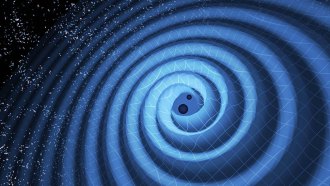
Gravity waves are seen again
Four months after scientists announced the first detection of gravity waves, another set of ripples in spacetime have emerged. The new ones come from the clash of mid-size black holes in the distant universe.
- Physics
Cool Jobs: Solar sleuthing
No star is closer than the sun, and yet there’s much science still don’t know about how it actually works. These scientists are helping solve the mysteries.
- Chemistry
Concrete science
Teen researchers are exploring ways to strengthen this building material, use it for safety purposes and use its discarded rubble.