bulbous: Having a bulb-like shape.
calcite: A type of extremely white and not terribly hard mineral that serves as the basis of many types of rock. It is the main ingredient in both limestone and marble, for instance. It’s chemical formula is CaCO3.
calcium: A chemical element and alkali metal common in minerals of the Earth’s crust and in sea salt. It is also found in bone mineral and teeth, and can play a role in the movement of certain substances into and out of cells.
crystal: (adj. crystalline) A solid consisting of a symmetrical, ordered, three-dimensional arrangement of atoms or molecules. It’s the organized structure taken by most minerals. Apatite, for example, forms six-sided crystals. The crystalline components of a rock are usually too small to be seen with the unaided eye.
element: A building block of some larger structure. (in chemistry) Each of more than one hundred substances for which the smallest unit of each is a single atom. Examples include hydrogen, oxygen, carbon, lithium and uranium.
evaporate: To turn from liquid into vapor.
gypsum: A common mineral often used as fertilizer, as chalk and in plaster. It is commonly found in the drywall used to construct interior walls and ceilings.
hue: A color or shade of some color.
iron: A metallic element that is common within minerals in Earth’s crust and in its hot core. This metal also is found in cosmic dust and in many meteorites.
mineral: Crystal-forming substances that make up rock, such as quartz, apatite or various carbonates. Most rocks contain several different minerals mish-mashed together. A mineral usually is solid and stable at room temperatures and has a specific formula, or recipe (with atoms occurring in certain proportions) and a specific crystalline structure (meaning that its atoms are organized in regular three-dimensional patterns).
salt: A compound made by combining an acid with a base (in a reaction that also creates water). The ocean contains many different salts — collectively called “sea salt.” Common table salt is a made of sodium and chlorine.
solution: A liquid in which one chemical has been dissolved into another.
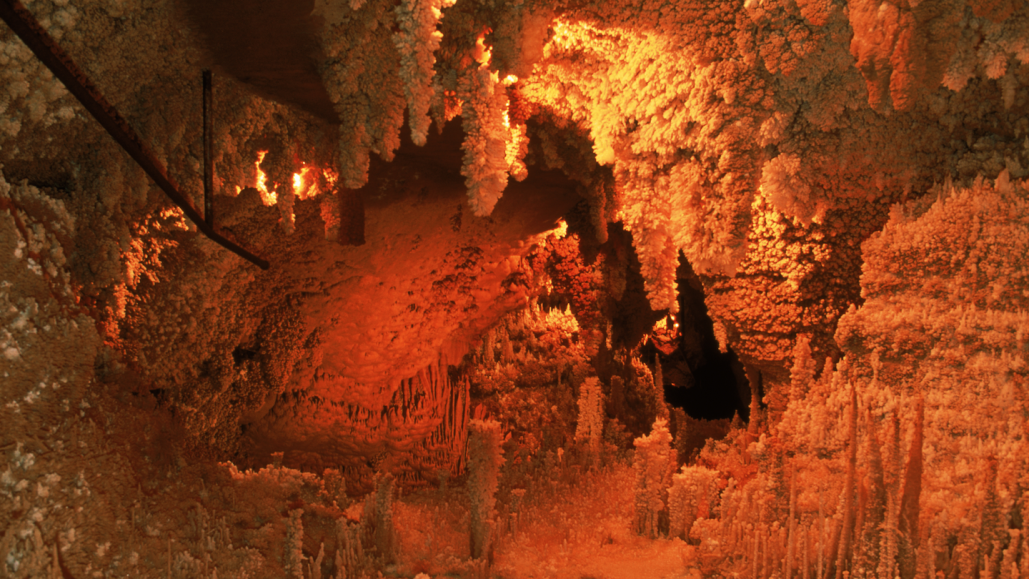
stalactite: A mineral formation found in caves that forms in much the same way that icicles do. Liquid water slowly drips down from a surface. But if the water evaporates before the drop falls to the ground, any minerals in the water may solidify to form rock. Over time, the stalactites may grow to a meter or more across and many, many meters long.
stalagmite: A mineral feature that can develop in moist caves. Water that drips down from the cave ceiling can very slowly evaporate, leaving behind an upward-growing mound of mineral deposits, or rock. Most of these structures, which resemble upside down icicles,have rounded or flattened tips.