All Stories
- Chemistry
Explainer: What are fats?
A fat molecule's three long chains of carbon and hydrogen atoms repel water, stash energy and keep living things warm — even in the bitter cold.
- Brain
Americans tend to see imaginary faces as male, not female
When people see imaginary faces in everyday objects, those faces are more likely to be perceived as male than female.
- Math
Scientists Say: Geometry
Geometry is math that allows people to measure, analyze and compare figures in space.
- Health & Medicine
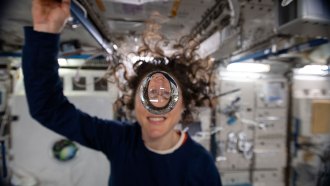
Here’s how a new sleeping bag could protect astronauts’ eyesight
A new sleeping bag could avoid vision problems on long space flights due to microgravity. It counters a fluid buildup behind astronauts’ eyes.
- Environment
Explainer: Gravity and microgravity
The force of gravity holds us on the ground, keeps planets in orbit and extends throughout space. A very weak gravitational pull is called microgravity.
- Science & Society
New training builds ‘mental’ muscles in athletes
The training builds focus and resiliency while limiting the self-doubt that can cripple competitors’ ability to perform at their peak.
- Animals
Mysterious kunga is the oldest known human-bred hybrid animal
People bred these animals — part donkey, part wild ass — some 4,500 years ago, probably for use in fighting wars.
- Climate
Let’s learn about the science of the Winter Olympics
From scientific innovations to climate change and weather, there’s plenty of science to be found among the feats of amazing athleticism.
- Chemistry
Scientists Say: Decay
This word can refer to rotting flesh or the transformation of radioactive atoms.
- Earth
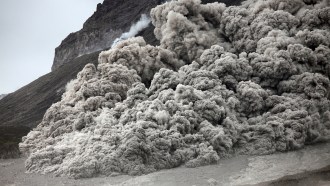
Volcanic avalanches may be more destructive than previously thought
Pressures within these pyroclastic flows may be as much as three times as high as observations had suggested.
- Animals
DNA in air can help ID unseen animals nearby
Analyzing these genetic residues in air offers a new way to study animals. It could give scientists a chance to monitor rare or hard to find animals.
- Animals
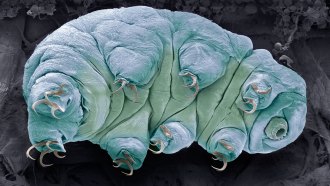
Living mysteries: Why teeny-weeny tardigrades are tough as nails
Tardigrades often live in cool, damp moss. Their cushy life has somehow prepared them to survive the lethal radiation of outer space.