All Stories
- Animals
In a first, scientists keep cells alive in the brains of dead pigs
They’re not true zombies — but these pig brains showed signs of cellular life long after the animals had died.
- Animals
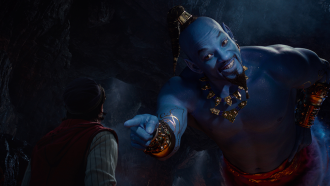
Let’s turn a genie blue
Aladdin’s genie is very magical. He’s also blue. What might explain that? Nature has some tricks on offer.
- Agriculture
Get ready to eat differently in a warmer world
Climate change is affecting what we eat, from making crops less productive to making foods less nutritious. Scientists are studying how farmers can adapt.
- Climate
Could climate change worsen global conflict?
Famine, natural disasters and sea-level rise can all disrupt societies. These can add pressure to unstable regions — sometimes to the point of prompting wars.
- Animals
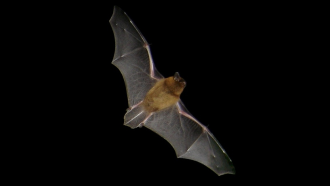
Bats in the attic prompt boys to create a better bat detector
When a teen learned he had 700 bats in his attic, he decided to develop a better bat detector.
- Physics
Meteorites may be excavating lunar water
When meteorites hit the moon, water is released from the moon’s soil. That suggests the moon has water buried all across its surface.
- Computing
Novel fabric could turn perspiration into power
Sweat cools people by evaporating. A teen now wants to use it to generate electricity as well.
- Humans
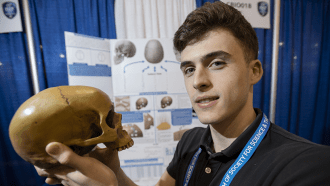
New forensic technique may better gauge age at death
An 18-year-old student from Ackworth, England, has come up with a better way to estimate the age at death for many human remains. It needs only a CT scan of the skull.
- Animals
Geneticists get closer to knowing how mosquitoes sniff out our sweat
Scientists have found that a protein in the antennae of some mosquitoes detects a chemical in human sweat.
- Animals
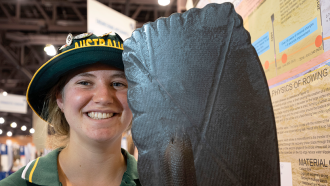
Bumpy edges could be key to record-breaking oars
Inspired by the bumpy edges of flippers on a humpback whale, an Australian teen has redesigned oars for use by competitive rowers.
- Health & Medicine
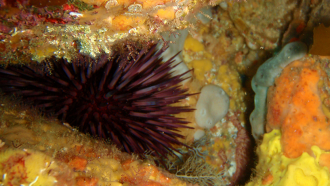
Sea urchins inspired a strong new medical staple
Teens combined forces to study how a sea urchin spine might inspire a better medical staple.
- Math
Science is helping kids become math masters
Some researchers study video games, students’ posture and more as a means to help kids become better and more comfortable with math.