All Stories
- Climate
Scientists Say: Waterspout
A whirlwind over land is just a whirlwind. But over water, a whirlwind becomes a waterspout.
- Earth
Earth’s core may have hardened just in time to save planet’s magnetic field
Earth’s inner core began to solidify within the past 565 million years, a study finds. That could explain why the planet’s magnetic field did not collapse.
- Chemistry
Shell shocked: Emerging impacts of our acidifying seas
As Earth’s climate changes, the oceans are becoming more acidic. Here’s how oysters and reefs are responding to their acidifying bath.
- Animals
Ocean acidification may ground swimming skates
Fish might seem immune to acidic waters, but check their skeletons. They can be vulnerable and eventually alter how fish behave.
- Animals
Is ocean acidification knocking the scents out of salmon?
In more acidic water, salmon don’t seem to recognize the smell of danger. Will their populations take a nosedive as carbon-dioxide levels rise?
- Animals
Animal graveyard found in deeply buried Antarctic lake
Mud from Antarctica’s Lake Mercer surprised scientists with what appeared to be the carcasses of tiny animals. A neighboring lake had only microbes.
- Animals
A Bolivian frog species returns from the dead
A Bolivian frog was missing in the wild for 10 years. Scientists feared chytrid fungus had driven the frog extinct. Then they found 5 survivors.
- Materials Science
How to turn a greenhouse into a powerhouse
See-through solar cells could turn greenhouses into solar power plants.
-
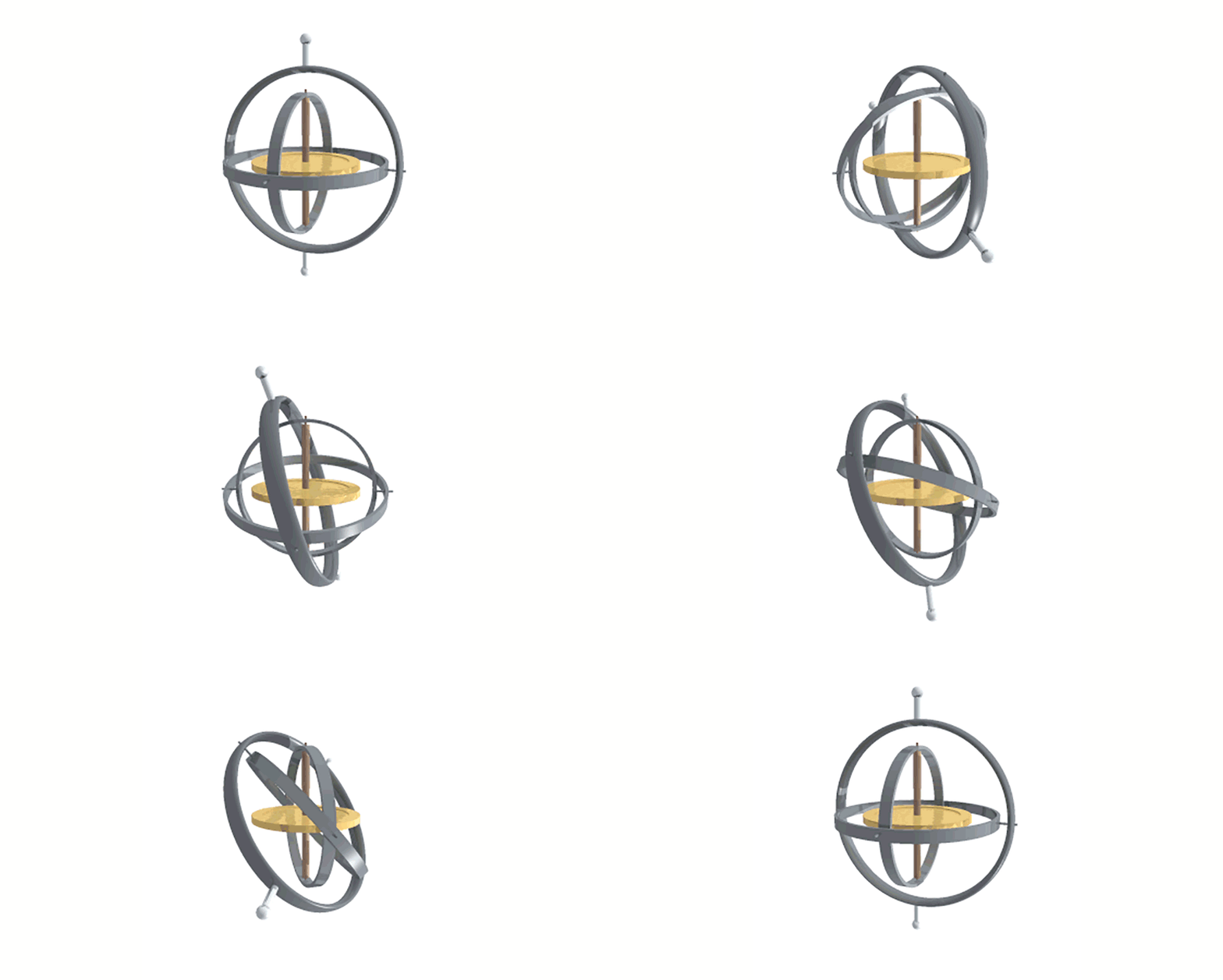
Scientists Say: Gyroscope
Gyroscopes are devices that measure the three-dimensional orientation of an object. They can be found in objects as varied as smartphones and space telescopes.
- Climate
Earth’s permafrost is heating up
Climate change is warming Earth’s permafrost — and in some places thawing it. This could lead to massive releases of planet-warming greenhouse gases.
- Computing
Rise of the botnets
Botnets are armies of connected, infected computers that attack websites and other online businesses. Some scientists have found ways to use connected computers for good, too.
- Health & Medicine
For coughing up phlegm, water is key
Patients with diseases like cystic fibrosis get lungs filled with sticky mucus. Adding water could be the key to getting that phlegm out.