All Stories
- Animals
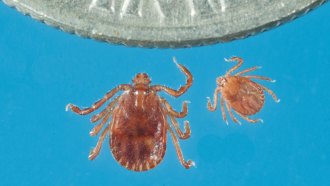
An Asian, self-cloning tick threatens U.S. livestock
The longhorned tick spreads human diseases in its East Asian homeland. Now it’s invaded the United States. There, it has threatened mostly livestock — so far, anyway.
- Planets
Thick atmosphere boosts how fast Venus spins
The thick atmosphere on Venus can change by a few minutes every day how long it takes the planet to rotate.
- Earth
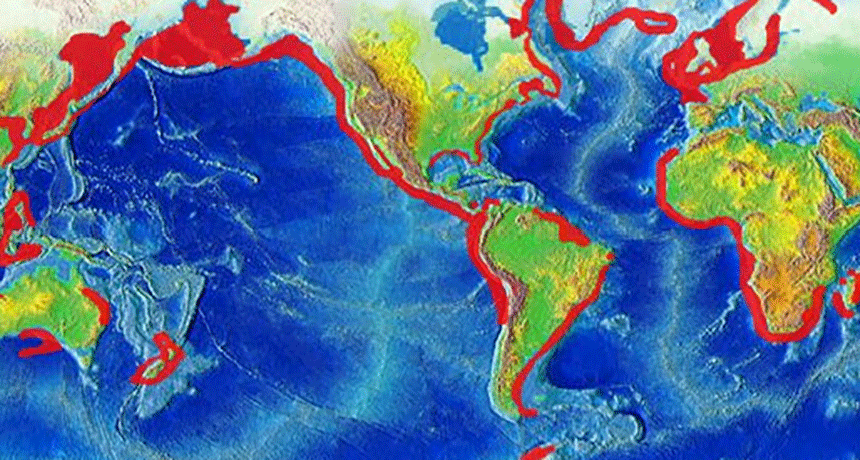
Scientists Say: Upwelling
This is a process in which a substance rises and spreads out over something else. Upwelling happens in the ocean, inside the Earth and even in a planet’s atmosphere.
- Animals
Here’s what narwhals sound like underwater
Scientists eavesdropped while narwhals clicked and buzzed. The work could help pinpoint how the whales may react to more human noise in the Arctic.
- Health & Medicine
Dogs carry a grab bag of flu viruses
Dogs carry a mix of flu viruses, including some that came from pigs. But there’s no reason to worry just yet.
- Climate
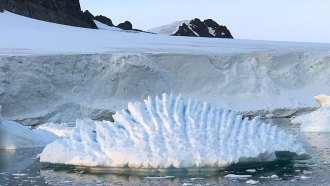
Antarctica’s melting speeds up
Antarctica’s ice has been melting faster in the last five years. This has raised the world’s oceans almost 8 millimeters on average.
- Chemistry
‘Thirdhand’ smoke can hitchhike to non-smoking sites
Harmful “thirdhand” smoke — the type that attaches to surfaces — can hitch a ride on airborne particles or clothes and travel into non-smoking buildings.
- Climate
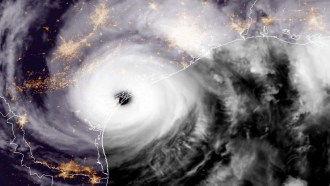
Tropical cyclones are getting more sluggish
Hurricanes and other storms are traveling more slowly than they used to. That might mean even more rainfall for communities they batter.
- Animals
Scientists Say: Krill
Krill are small crustaceans in the ocean. They are an important food source for other larger animals, and their tiny swimming motions can mix nutrients in the sea.
- Archaeology
Putting hats on Easter Island statues may have required some rock and roll
Fitting huge stone hats on 3-story-high Easter Island statues may have required only a small workforce armed with ropes and ramps.
- Animals
These caterpillars are scaring the city of London
The fluffy-haired larvae of the oak processionary moth have a curious behavior, moving in neat, little lines. But the caterpillars pose threats to trees and human health.
- Animals
This extinct bird boasted dinosaur-like teeth
Fossil skulls from an ancient bird shows this flyer had a beak — but dino-like chompers to chew through its prey.