All Stories
- Planets
Flared! How a planetary ‘neighbor’ may have been fried
Hoping for life on the planet our stellar neighbor Proxima Centauri? Don’t hold your breath. Its star may have sterilized its Earthlike exoplanet.
- Brain
Explainer: What are opioids?
Opioid drugs can kill pain, but they can also kill people. Here’s how.
- Brain
Teeny tiny hairs on brain cells could have big jobs
Brain cells have tiny antennae called cilia. But no one really seemed to know what they did. Now, scientists have shown they could play a role in obesity.
- Animals
Killer whale blows a raspberry, says ‘hello’
Orcas can mimic a range of sounds, including human speech — sort of.
- Brain
Scientists Say: Receptor
This molecule is a chemical messenger’s docking station. A receptor serves as a lock for cell activity.
- Math
Redrawing political boundaries may alter rates of violent crime
The way politicians draw boundaries for voting districts could affect not only who wins elections, but also where rates of violent crime may rise.
- Brain
Cool Jobs: Decoding how your brain ‘reads’
For some stroke victims and people with dyslexia, reading is nearly impossible. These researchers are working to understand why.
- Oceans
More than half the world’s ocean area is actively fished
Fleets harvest fish from 55 percent of the world’s total ocean area. Just a handful of countries play an outsized role fishing the open ocean, far from coasts.
- Planets
Here’s why Venus is so unwelcoming
Venus is hard to study. Scientists also find it hard to get money to send spacecraft there. But researchers have ideas about how to tackle both challenges.
- Animals
Tricky turns give prey a chance against lions and cheetahs
A bonanza of running data on wild predators shows that a successful hunt requires more than sprinting.
- Earth
Scientists Say: Inclusion
As rocks form slowly, they can trap things in their timeless clutches. A material trapped inside a mineral is called an inclusion.
- Chemistry
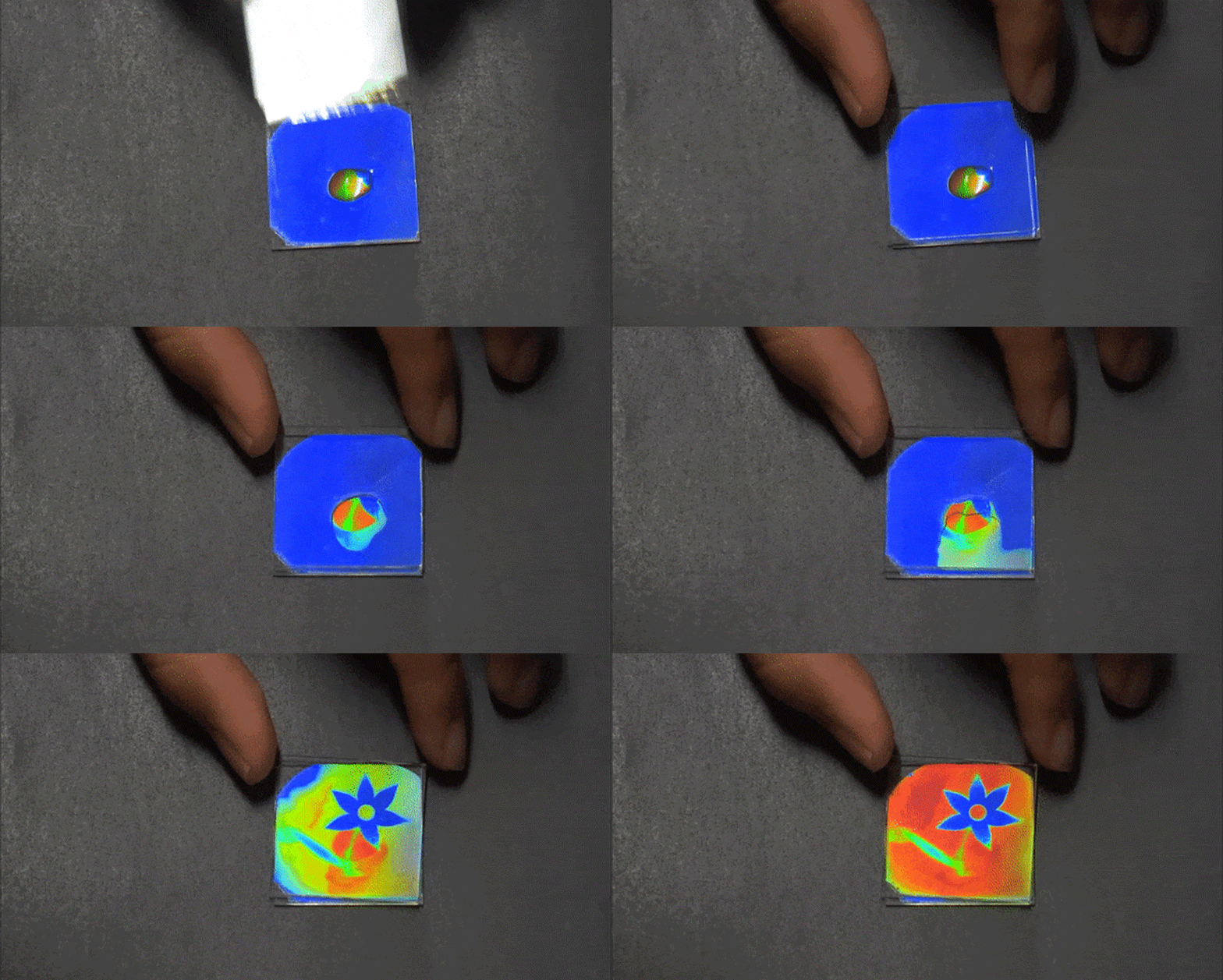
Moisture unmasks camouflaged message
Researchers have developed a new type of chemical that will mask some hidden message — until you add water.