All Stories
- Earth
Plastic taints most bottled water, study finds
Tiny bits of plastic contaminated nearly every tested sample of bottled water from nine countries. Whether ingesting the plastic might pose some risk remains unknown.
- Life
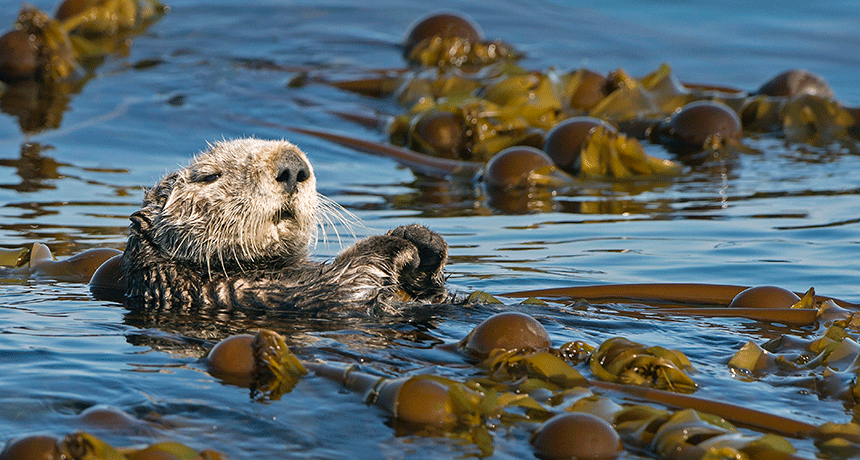
Scientists Say: Kelp
Kelp is a kind of seaweed that forms huge forests under the ocean. But it isn’t a plant; it’s a type of algae.
- Computing
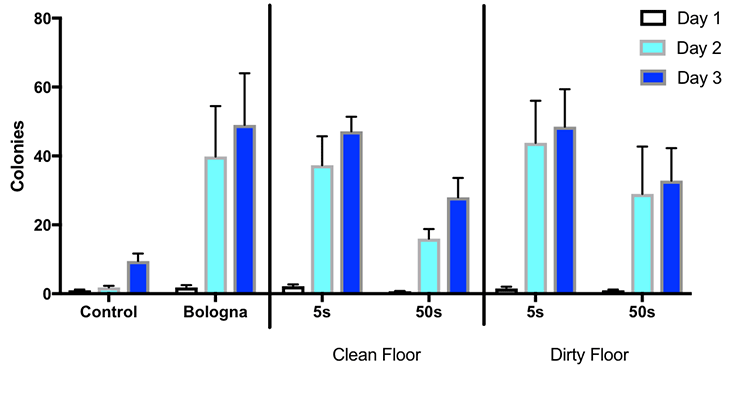
Computers mine online reviews for signs of food poisoning
Health officials are getting help in identifying restaurant goers who got food poisoning by teaching computers to scout social-media posts for signs of illness.
- Agriculture
Can anything stop the big pig invasion?
Millions of wild pigs roam North America, causing billions of dollars in damage every year. Scientists are looking for new ways to stop the swine.
- Computing
Zap! Laser tattoos could create electronics to eat or wear
Lasers can tattoo a nontoxic form of carbon onto everyday items. This one day could lead to wearable — even edible — electronics.
- Health & Medicine
Analyze This: The power in being understanding of your flaws
Expecting nothing but perfection from yourself can lead to depression. Forgiving yourself after mistakes can lower your risk of feeling bad, a new study finds.
- Tech
Electricity sensor harnesses a shark’s secret weapon
A new “quantum” material mimics the sensors that help a shark sense its prey. Like a shark, it can detect tiny electric fields.
- Animals
Light at night lengthens how long birds can spread West Nile virus
Light at night prolongs the time it takes these birds to knock out a West Nile infection. Mosquitoes that bite them during this time can pick up and spread their virus to others — even people.
- Math
Scientists Say: Uncertainty
In science, uncertainty is a term used to express how much data might vary around a measured point.
- Computing
On Twitter, fake news has greater allure than truth does
In the Twittersphere, fake news gets more views than real stories, based on an analysis of more than 4.5 million tweets.
- Physics
Wireless devices crowd out cosmic radio signals and more
Cell phones and other devices emit radio waves that can interfere with important scientific research. That’s why researchers are seeking ways to share the radio spectrum.
- Animals
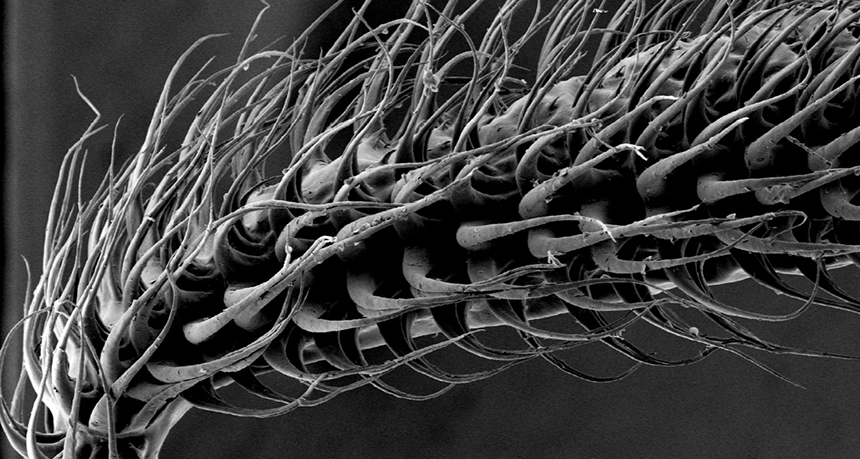
The secrets of super-slurper bat tongues
Tiny hair-like structures greatly boost the ability of some bats to slurp up nectar from flowers.