All Stories
- Animals
Analyze This: Electric eels’ zaps are more powerful than a TASER
Shocking! A biologist reached his hand into a fish tank and let an electric eel zap him. It let him measure precisely how strong a current it could unleash to defend itself.
- Climate
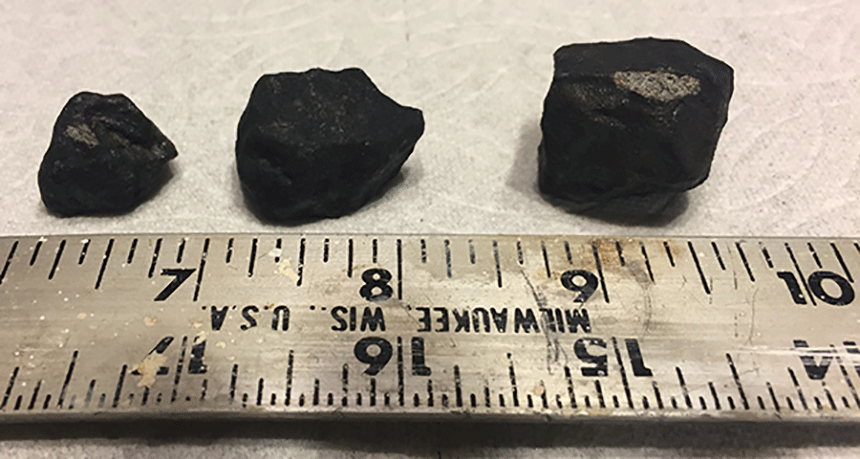
A meteor explodes over Michigan
Here’s how scientists tracked down the source of a heavenly explosion over rural Michigan, last week.
- Physics
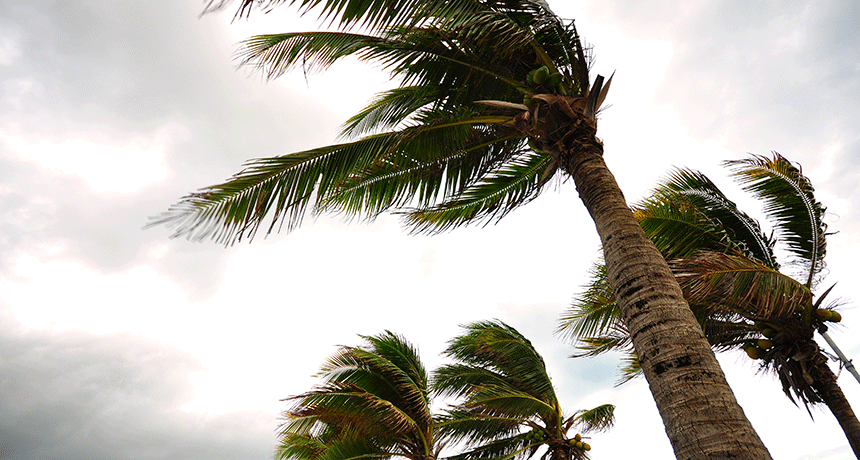
Probing the power of the winds
Young researchers have been exploring the energy in wind to see how best they might tame it, harness it and understand its role in shaping the natural world.
- Climate
Explainer: Winds and where they come from
Temperature and pressure are critical factors affecting why the wind blows where it does. Understanding the nature of wind can teach us a lot about weather.
- Space
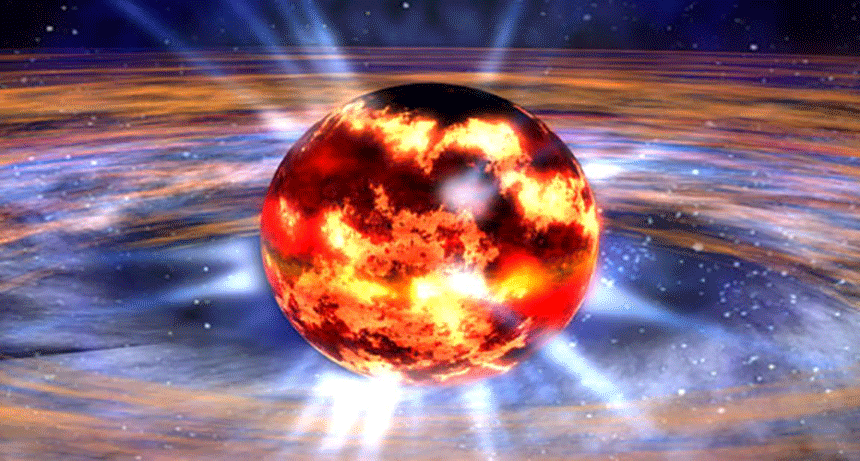
Scientists Say: Neutron star
When large, ancient stars die, they explode. But they don’t disappear. The remnants become incredibly dense neutron stars.
- Chemistry
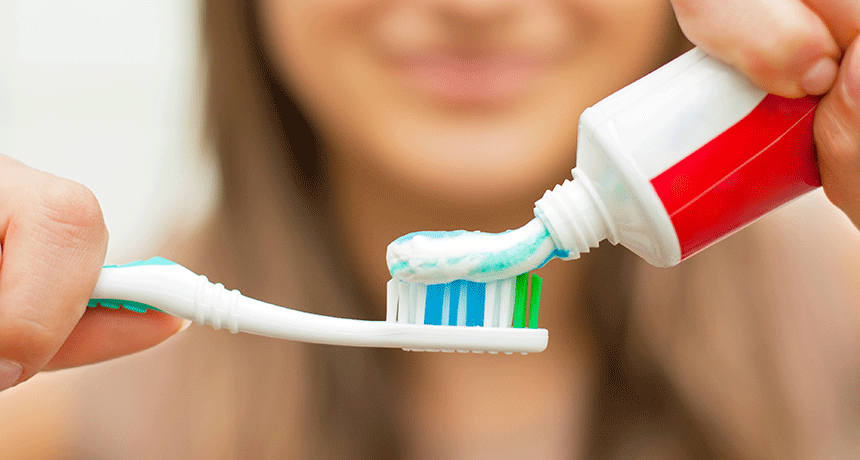
Changing toothpastes? Change your toothbrush
Scientists have found that toothbrush bristles absorb triclosan, then release the potentially toxic chemical when users switch toothpastes.
- Science & Society
Kids make great citizen scientists
When professional scientists need help from a crowd, they often turn to kids and teens.
- Climate
Scientists at last link some extreme weather to human activities
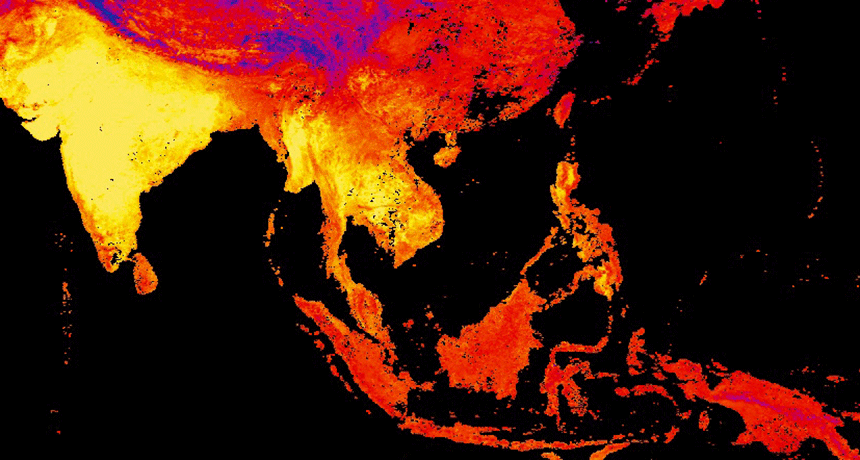
Scientists say that research shows several of 2016’s extreme weather events would never have happened without the help of human-caused climate change.
- Physics
Major gravity experiment recreated aboard a satellite
A spacecraft was used to “drop” two objects and test their rate of fall. The new, super-precise findings confirm objects will fall at the same rate (in the absence of air resistance) — and that when it comes defining the effects of gravity, Einstein got it right.
-
- Animals
Escaping narwhals can freeze and flee at the same time
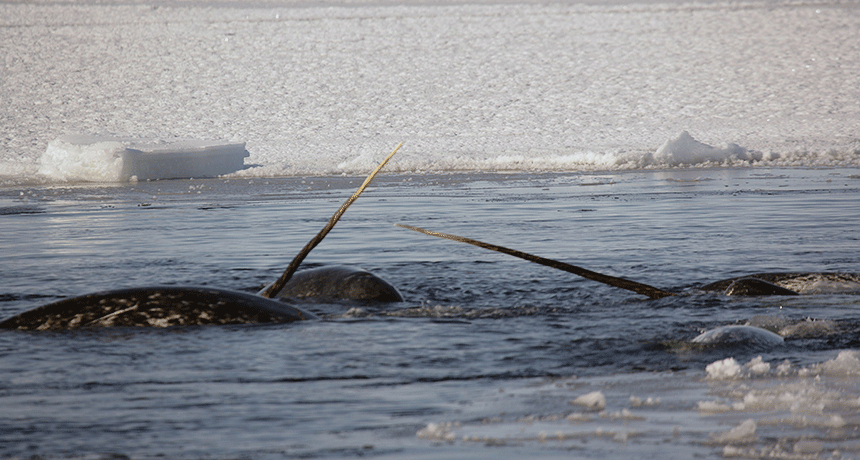
Narwhals’ heart rates plummet while diving quickly to get away from people. The combination may stress the whales as human activity increases in the Arctic.
- Health & Medicine
Scientists Say: Epidermis
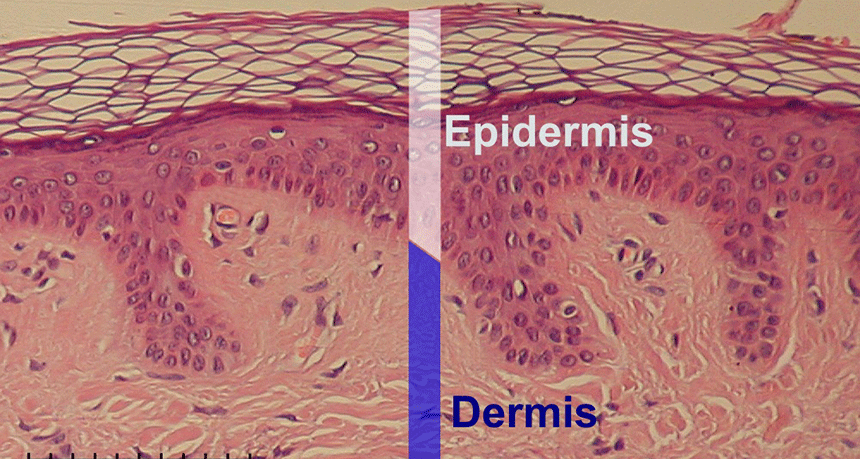
The epidermis is the outer layer of your skin. It helps protect you from dangerous things in the environment, and helps control how much water evaporates from your body.