All Stories
- Brain
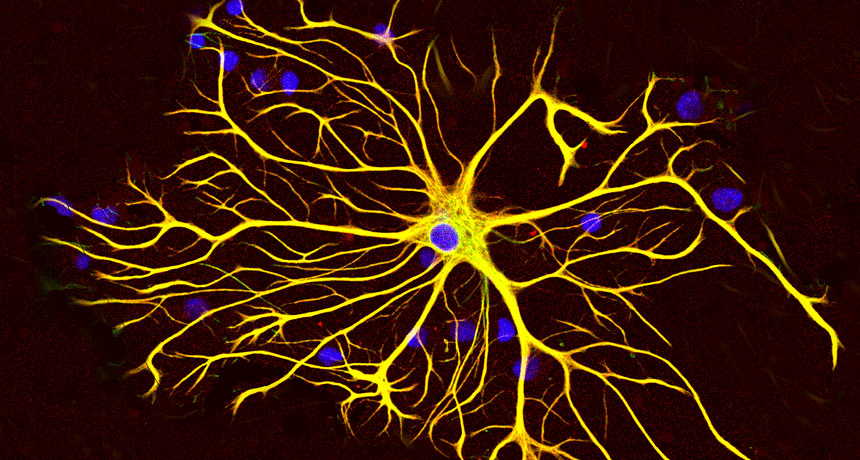
Ow! These cells might help brains remember pain and fear
The brain may learn from traumatic experiences with the help of special cells, a new study finds. Scientists used to think these cells, called astrocytes, were just there to support others.
- Climate
Revisit 2017’s most important stories
The year was full of major scientific events and discoveries, from the finding of a new continent to a solar eclipse witnessed by millions.
-
Here’s the science you loved most this year
From dinosaur deaths to screen time, here’s the science stories you were reading this year.
- Health & Medicine
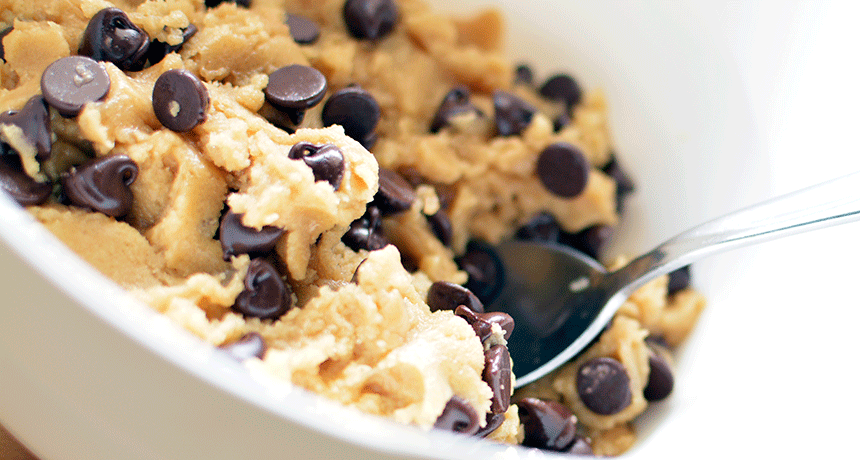
Raw cookie dough’s flour could make you really sick
It’s not just the eggs in cookie dough that can pose food-poisoning risks. Even flour can sicken people if it is eaten raw.
- Genetics
New tools can fix genes one letter at a time
New tools can edit the genome one letter at a time, correcting common errors that lead to disease.
- Materials Science
Want a tougher space suit? Just add liquid
Using a special liquid, engineers are designing new treatments for spacesuits so that they can better resist puncturing from tiny meteorites and other hazards.
- Physics
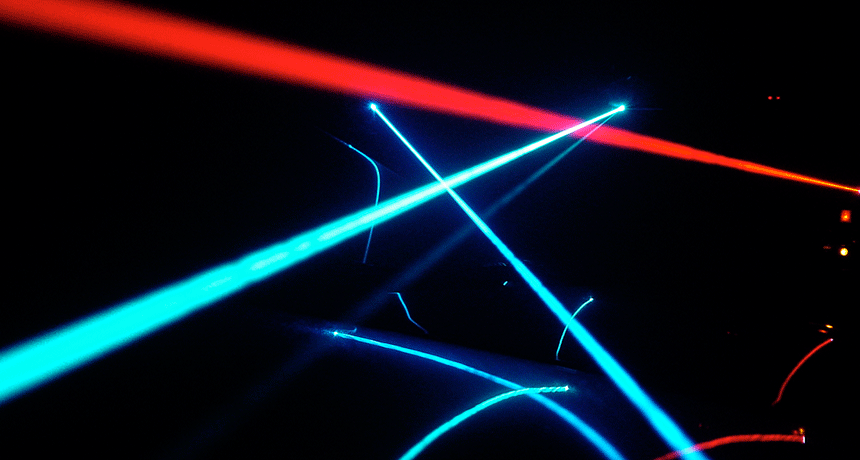
Scientists Say: Laser
A laser is a device that emits a strong, narrow beam of light. “Laser” is actually an acronym, and stands for “light amplification by stimulated emission of radiation.”
- Microbes
Magnetic heating may replace surgery to cure some infections
Scientists are testing magnetic fields as a way to kill bacteria that drugs normally cannot reach — such as those on medical implants inside the body.
- Tech
Young challengers take a deep dive into engineering
Thirty teens worked in teams to design, build and test remotely-operated vehicles. Their mission: to grab river sediment — and perhaps a shot at winning a major national competition.
- Brain
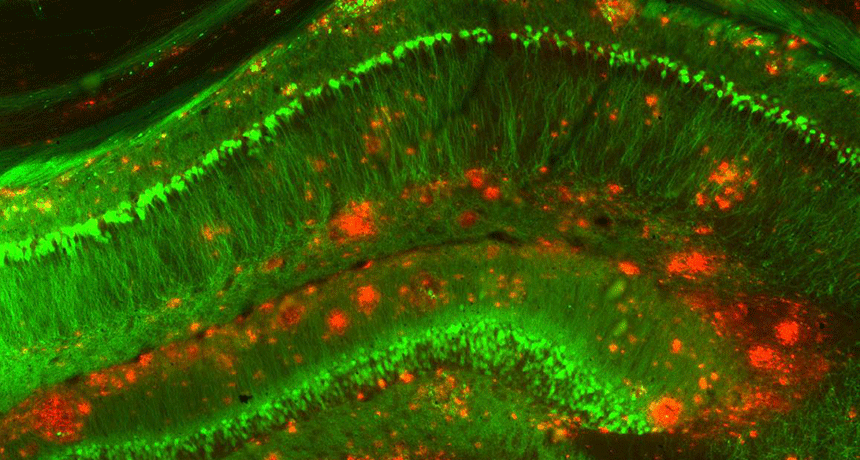
Alzheimer’s protein can sneak into the brain from the blood
Experiments in mice show that proteins linked with Alzheimer’s disease can enter the brain from the blood, then stockpile there.
- Animals
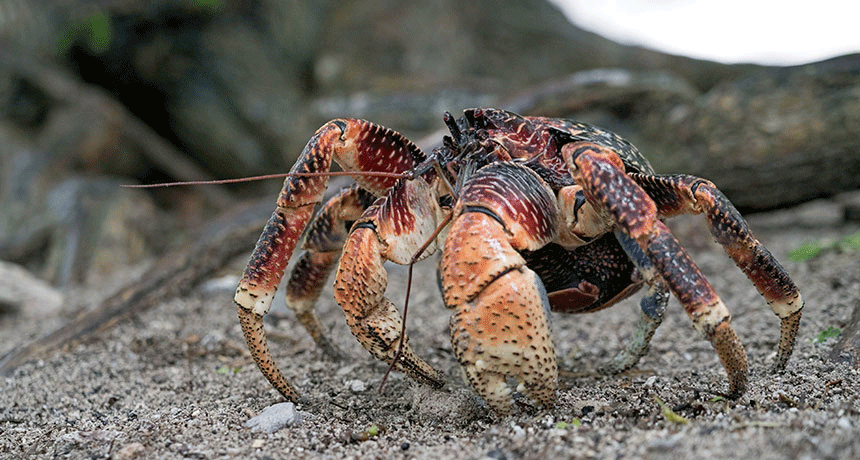
Humongous land crab dines on remote-island seabirds
A biologist has documented a coconut crab taking out a seabird as part of a study of the huge invertebrates living on an Indian Ocean archipelago.
- Brain
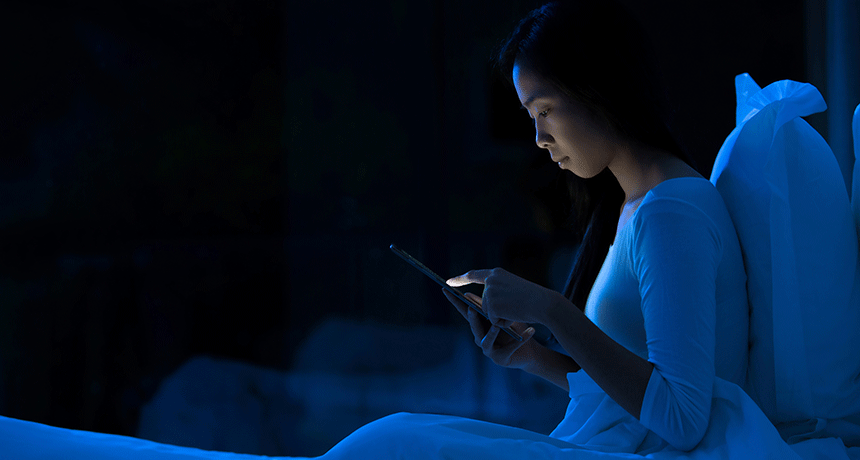
Trading smartphone time for sleep? Your loss
A new study shows more and more teenagers are hanging out on devices when they should be catching ZZZs, putting their health at risk.