All Stories
- Physics
Astronomers finally find the cosmic source of gold and silver
After a collision between neutron stars is caught rippling spacetime, telescopes home in on where the ripples came from. The afterglow of light they found provided interesting new science.
- Health & Medicine
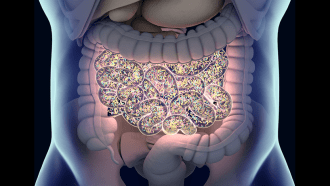
How bugs in your gut might hijack your emotions
Tiny molecules in the brain may help bugs in the gut hijack people’s emotions. That’s the conclusion of some new research.
- Brain
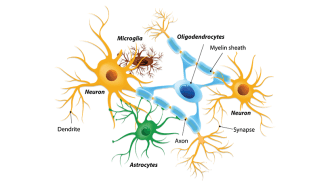
Scientists Say: Glia
Scientists used to think glial cells did nothing more than glue the brain together. Now we know they do much, much more.
- Chemistry
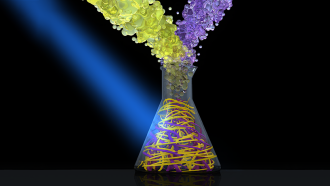
Blue light flexes its chem-building muscle
Scientists found a new way to build a strong but bendable blend of polymers. The trick? Expose the ingredients to a beam of blue light.
- Chemistry
Explainer: What are polymers?
Polymers, whether natural or artificial, are big molecules made by linking up smaller repeating chemical units. The most common “backbones” for polymers are chains of carbon or silicon, each of which can bond to four other atoms.
- Health & Medicine
Social media: What’s not to like?
Social media can help teens connect with friends and family. Sometimes, however, it may leave them feeling depressed or isolated.
- Science & Society
Social networks can learn about you through your friends
Social networks can gather information from users that let them create “shadow profiles” of others — even people not on the network.
- Plants
Cool Job: Rethinking how plants hunt for water
Studies probing the very beginnings of root development may have important implications for growing food in a world where the climate is changing.
- Brain
Could Zika become a cancer treatment?
The same virus that provoked fear over causing birth defects, last year, may have a beneficial alter ego. Scientists find it may kill cells destined to form deadly brain tumors.
- Computing
Scientists Say: Radar
This is a system used to detect objects large and small. It works by sending out radio waves and waiting for them to bounce back.
- Chemistry
Specially coated fabric could turn a shirt into a shield
Specially treated fabrics offer a new kind of defense against chemical attacks. It could protect troops — and people living in war-torn nations where chemical weapons may be used.
- Health & Medicine
Good germs lurk in gross places
What do poop, dog drool and snot have in common? Though disgusting, they all carry microbes that can help keep people healthy.