All Stories
- Genetics
Explainer: Why scientists sometimes ‘knock out’ genes
How do we learn what a particular molecule does in the body? To find out, scientists often 'knock out' the gene that makes it. Here’s how.
- Brain
Scientists Say: Rabies
Rabies is a disease caused by the rabies virus. There is a vaccine, but without it, people and animals can die from this disease.
- Genetics
One day, your sunscreen may be made from DNA
A new approach to sunscreen could use a thin layer of DNA to protect skin cells — and hopefully prevent cancer.
- Health & Medicine
Bones have stealth role in muscle, appetite and health
Surprise! Bones release hormones that carry on long-distance chats with the brain and other organs. Studies in mice show these conversations can affect appetite, how the brain uses energy and more.
- Health & Medicine
Explainer: What is a hormone?
Various tissues secrete special chemicals, known as hormones. They travel, usually in blood, to a particular distant site where they tell certain cells it’s time to go to work.
- Brain
Evening screen time can sabotage sleep
Blue light from electronic devices can impair the body’s ability to sleep, making it hard to focus in the morning.
- Earth
Analyze This: Not all races saw equal improvements in this air pollutant
Levels of one U.S. air pollutant, NO2, have dropped over time. But neighborhoods with predominantly non-white residents saw smaller improvements than did those that were mostly white.
- Animals
Pumpkin toadlets can’t hear themselves talk
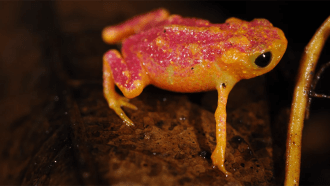
Tiny orange frogs make soft chirping sounds in the forests of Brazil. Their ears, however, cannot hear them, a new study finds.
- Health & Medicine
Explainer: How the ears work
Most people probably think of their ears as the flaps on the sides of their heads. But there’s a lot of machinery inside that lets us hear our favorite tunes.
- Animals
Scientists Say: Vampire
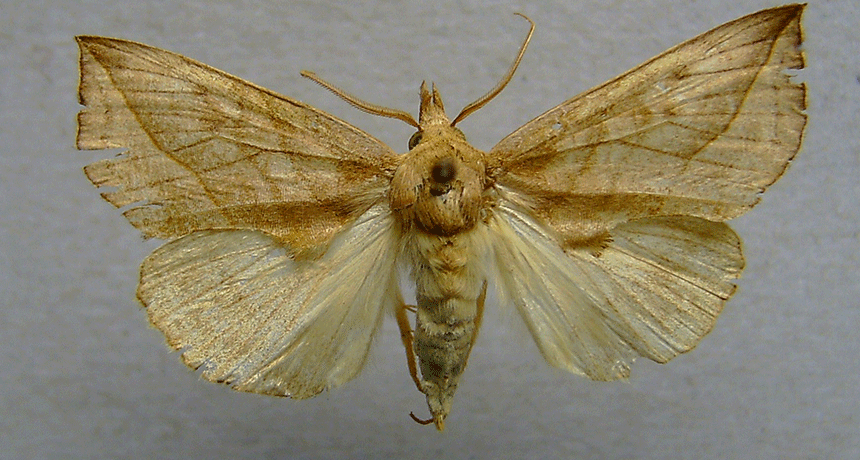
Human vampires are found only in fiction. But vampire bats and moths are the real thing. These animals love the taste of blood, and some can’t live without it.
- Chemistry
When bitter + bitter = sweet
Two artificial sweeteners lose their bitter aftertastes when combined together. Scientists have just figured out why.
- Materials Science
You can peel permanent marker, intact, off of glass
The surface tension of water can essentially scrape a thin film of some water-repellent material — such as permanent ink — off of glass.