All Stories
- Archaeology
European fossils may belong to earliest known hominid
New fossils suggest that the earliest non-ape human ancestors may have evolved in Europe, not Africa.
- Climate
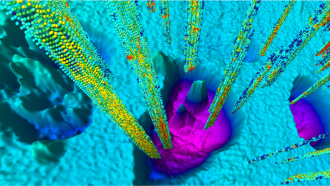
Ancient Arctic ‘gas’ melt triggered enormous seafloor explosions
Methane explosions 12,000 years ago left huge craters in bedrock on the Arctic seafloor. Scientists worry more could be on the way today as Earth’s ice sheets melt.
- Animals
Analyze This: A massive annual insect migration
A study of seasonal insect migration gave some surprising results.
- Animals
How a flamingo balances on one leg
Flamingos are so good at balancing on just one leg that they can snooze that way with little effort.
- Animals
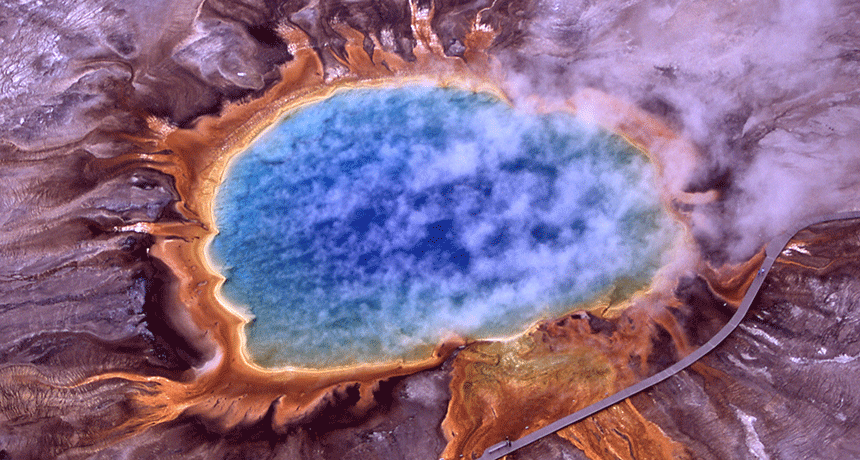
Scientists Say: Extremophile
Some species can survive high heat, freezing cold or other extreme environments. Scientists call these organisms extremophiles.
- Chemistry
New rules point scientists toward next-gen germ-killers
Shape and other features help germ-killing drugs make it through barriers to enter bacteria. Knowing how they do this could lead to more and better better antibiotics.
- Fossils
Study claims to have found oldest human fossils
Humans, as a species, may be much older than previously thought. They also may have evolved further North and West of the suspected cradle of human evolution.
- Genetics
Cool Jobs: New tools to solve crimes
Future investigators may identify criminals by the microbes they leave behind or by using DNA-like evidence from strands of their hair.
- Planets
Jupiter gets surprisingly complex new portrait
NASA’s Juno spacecraft has sent back unexpected details about Jupiter, giving scientists their first close-up of this gas giant.
- Chemistry
To test pill coatings, try a stomach in a flask
Which pain reliever should you buy? The tablet, gel tab or compressed caplet? A teen did an experiment to find out.
- Environment
Is your home chilly? This might just be healthy
Feeling mildly cold (or a bit too warm) forces the body to adjust what it’s doing to maintain a healthy temperature. And that can do a body good, data now show.
- Chemistry
BPA-free plastic may host BPA-like chemical, teen finds
Something has to replace the BPA in ‘BPA-free’ plastics. A teen has been probing what that is.