All Stories
- Planets
Small, distant worlds are either big Earths or little Neptunes
The Kepler space telescope data are in. They split Earth-like exoplanets into two groups and reveal 10 new rocky planets in the ‘Goldilocks’ zone.
- Climate
Hunting the mysterious source of a global illness
Doctors and scientists around the world are scouring the environment for the elusive cause of Kawasaki disease, a harmful childhood illness.
- Animals
DNA tells tale of how cats conquered the world
Ancient DNA study suggests that domesticated cats spread across the ancient world in two waves.
- Chemistry
Scientists Say: Photochromic
Photochromic chemicals change shape when exposed to a specific wavelength of light. The shape change changes the chemical’s color.
- Brain
Adolescents are brain-dense — and that’s good
Gray matter is densely packed in adolescents, brain researchers now find. This may explain how developing adults cope with decreasing gray matter volume.
- Health & Medicine
Therapeutic robots may soon swim within the body
Scientists are designing tiny robots that may one day do work inside the human body.
- Brain
Tongues ‘taste’ water by sensing sour
Water doesn’t taste like much, but our tongues need to detect it somehow. They may do it by sensing acid, a new study shows.
- Animals
Beware the tap of the narwhal’s tusk
A new video shows narwhals using their tusks to tap fish before eating them. They might be stunning their prey — or just playing with their food.
- Brain
Scientists Say: Amygdala
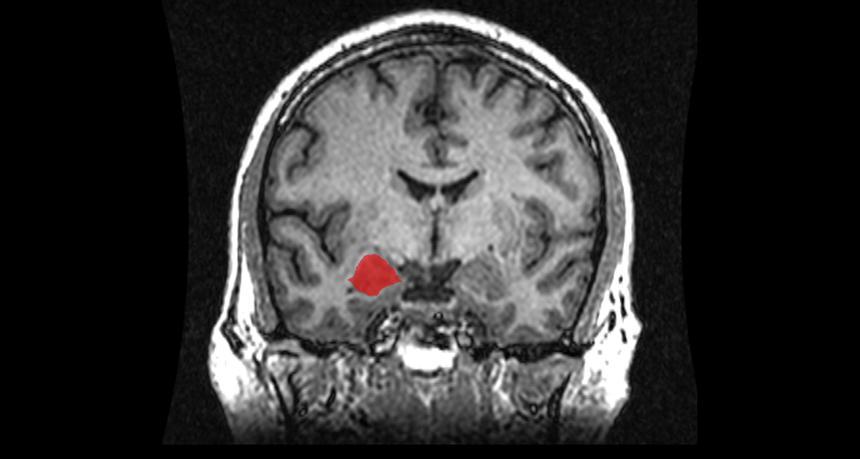
Named after the Greek word for “almond,” the amygdala helps us process emotions, make decisions and form memories.
- Brain
Brains learning together act the same
When students are all focused on the same thing, their brainwaves look the same, a new study shows.
- Climate
Cool Jobs: Bringing caves’ dark secrets to light
These three cave researchers study caves to learn more about climate, geology and organisms that can survive some of Earth’s most hostile environments.
- Planets
Jupiter may be the solar system’s oldest planet
Jupiter’s early existence may explain the odd arrangement of planets in the solar system, a new study suggests.