All Stories
- Archaeology
DNA from African mummies tie these folk to Middle Easterners
Ancient DNA extracted from 90 Egyptian mummies reveals genetic links to Greece and the Middle East.
- Ecosystems
Camera catches new fish species — as it’s eaten!
A video of a lionfish eating a new-found species of fish raises concerns about the threat lionfish pose to undiscovered species in deep reefs.
- Chemistry
Scientists Say: Catalyst
Sometimes a chemical reaction can take a while. If speed is needed, a catalyst can help.
- Chemistry
Trees can make summer ozone levels much worse
The greenery can release chemicals into the air that react with combustion pollutants to make ozone. And trees release more of those chemicals where it gets really hot, a new study finds.
- Health & Medicine
Think you’re not biased? Think again
Everyone holds some unconscious bias about certain social groups, even when they don’t mean to. Scientists are learning how people can fight such implicit biases.
- Planets
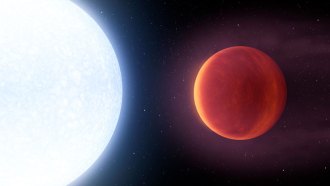
Hot, hot planet sets sizzling new record
Astronomers have discovered an odd new exoplanet. Called KELT 9b, is the hottest non-star known.
- Health & Medicine
Your gut’s germs may decide whether white bread or whole wheat is best — for you
Surprise! Gut microbes may determine how your body responds to starches in the diet.
- Animals
Orangs nurse young for more than eight years!
Orangutan moms and babies have been tricky to study in the wild, so researchers used dental tests to reveal a record setting nursing period.
- Health & Medicine
Scientists Say: Acoustic
Acoustic is an adjective used to describe something involving sound. It’s also a noun that refers to the branch of physics that studies sound.
- Animals
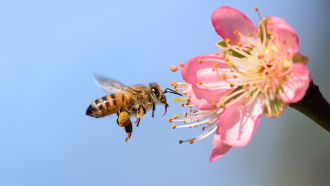
Popular pesticide may harm bee flight
In a lab experiment, honeybees flew sluggishly after eating pesticide-tainted food.
- Chemistry
World’s deepest zoo harbors clues to extraterrestrial life
Scientists have found a wide range of life deep below Earth’s surface. The discoveries could help inform our search for life on other planets.
- Physics
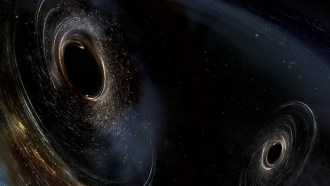
Gravitational waves detected yet again
For the third time in 16 months, scientists have announced detection of gravitational waves washing over the spacetime environment in which Earth resides. This seems to show that such waves may not be rare.