All Stories
- Genetics
Scientists Say: eDNA
Animals may escape traps or nets, but they often leave DNA behind in their environment, giving scientists important clues.
- Brain
What makes a pretty face?
Beautiful faces are symmetrical and average. Do we prefer them because this makes them easier for our brains to process?
- Health & Medicine
Implant traps cancer cells on the move
A device implanted under the skin extended the life of mice with breast cancer. It trapped injected cancer cells before they created tumors in organs throughout the body.
- Health & Medicine
Simpler way to screen for hidden hearing loss?
Many teens today walk around with undiagnosed hearing damage. But some Boston-based researchers have come up with a low-tech approach to screening these individuals so they can get help.
- Health & Medicine
‘Ringing’ in the ears may signal serious ear damage
A persistent ringing in the ears, also known as tinnitus, has become common in teens — and may point to eventual, permanent hearing loss.
- Animals
These young inventors had to make like a crab
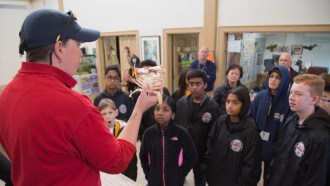
This year’s top challenge for Broadcom MASTERS finalists was to design and build a robotic arm based on a crab’s arm and claw.
- Climate
2015’s record heat: It will soon be ‘normal’
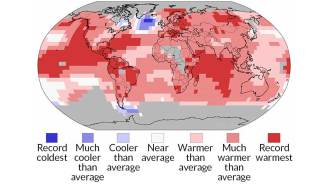
The record-setting global temperatures seen in 2015 could become common as soon as the 2020s, and known as the “new normal.”
- Animals
Speckled dino spurs debate about ancient animals’ colors
Structures found in fossil dinosaur skin may give clues to the creatures’ colors and how they lived. But not all scientists agree on how to interpret what they see.
- Chemistry
Milking chocolate for its health benefits
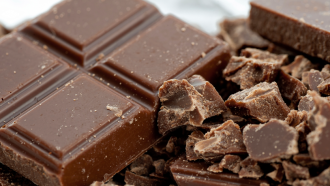
Researchers figure out how to give milk chocolate the same health benefits as dark chocolate. The secret ingredient is an extract from peanut skin.
- Physics
Scientists Say: Diffraction
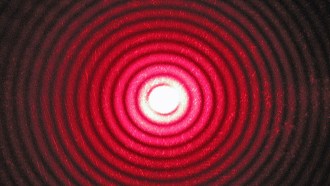
When liquid hits something it spatters, when light hits something, it scatters. The process is called diffraction.
- Climate
Predicting a wildfire with data from space
When the West gets dry it can catch fire. A teen decided to find out if satellite data might show where a fire’s fuel might reside.
- Health & Medicine
Could toothpaste give heart disease the brush-off?
Brushing with a toothpaste that dyes plaque green encourages people to remove more of it. This also lowered inflammation, which may cut someone’s risk of heart disease.