All Stories
- Physics
Einstein taught us: It’s all ‘relative’
One hundred years ago, a German physicist shared some math he had been working on. In short order, his theory of relativity would revise forever how people viewed the universe.
- Chemistry
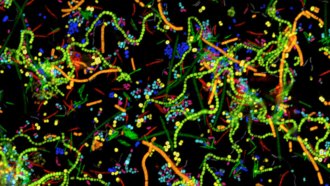
Slime cities
Biofilms are like tiny cities of bacteria — some harmless, others destructive. Scientists are learning how to keep these microscopic metropolises under control.
- Brain
Lessons from failure: Why we try, try again
We all suffer failures. But we don’t always try again. Focusing on what they can be learned might help people keep going, brain imaging data now show.
- Chemistry
Scientists Say: Organic
These days you might think organic refers just to food. But it has a completely different meaning in chemistry.
- Chemistry
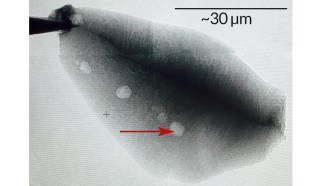
News Brief: Rare gem may hold earliest sign of life
This fossil, such as it is, offers no indication of what that life might have looked like. It merely holds carbon in a form typical of the type preferentially collected by living organisms.
- Agriculture
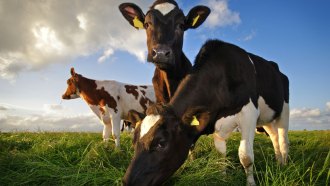
Cool Jobs: Crazy about cows
Scientists are studying cows from one end to the other, with the goal not only of making the animals healthier but also of helping the environment.
- Animals
New site for where wild canines became dogs
By studying the genetics of living dogs from around the world, scientists think they may have homed in on the origins of dog domestication: Central Asia.
- Brain
Males and females respond to head hits differently
Men and women are playing sports equally — and getting concussions in comparable numbers. But how their brains respond may differ greatly.
- Genetics
The earliest evidence of plague
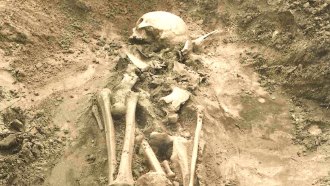
Plague is best known as the killer disease that wiped out nearly half of Europe during the 1300s. But the germ infected people up to 3,000 years earlier than that, DNA from ancient teeth now show.
- Climate
Clues to the Great Dying
Millions of years ago, nearly all life on Earth vanished. Scientists are now starting to figure out what happened.
- Chemistry
Mealworms chow down on plastic
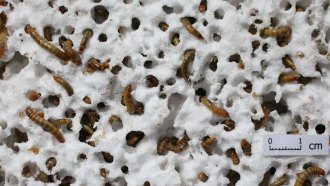
Gut bacteria in mealworms break down polystyrene. Feeding plastic to the worms, or the germs they carry, could be a way to get rid of these wastes.
- Math
Scientists Say: Quartile
A quartile might sound like a fourth. But that’s not quite what it is.