All Stories
- Chemistry
Cool Jobs: Saving precious objects
Museum conservators are experts at protecting and restoring precious objects. Along with art or history, many also have studied chemistry, physics, archaeology or other scientific fields.
- Animals
What’s for dinner? Mom.
Female spiders of one species make the ultimate sacrifice when raising their young: The mothers feed themselves to their children.
- Climate
Warming’s role in extreme weather
Extremes in temperature and precipitation will be more common as global temperatures rise. Human-led climate change is largely to blame, a new study finds.
- Climate
Cosmic rays offer clues about lightning
Space particles called cosmic rays pelt Earth. Scientists are using the rain of these particles to probe how lightning forms.
- Health & Medicine
Injected nanoparticles treat internal wounds
Soldiers wounded in a bombing could be treated with a shot of specially designed nanoparticles that stop bleeding and inflammation in the lungs.
- Environment
Scientists Say: Fracking
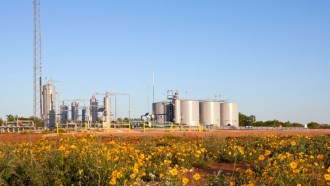
Liquid fuel sources such as natural gas and petroleum form deep underground between layers of rock. To retrieve them, engineers often use a technique called hydraulic fracturing, or fracking.
- Fossils
Ritual cannibalism occurred in Stone Age England
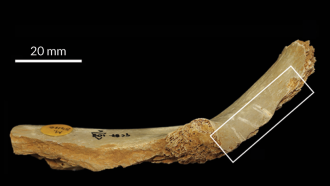
Stone Age human bones from a cave in England show signs of cannibalism. The people had been eaten during burial rituals nearly 15,000 years ago, experts say.
- Archaeology
Laser vision reveals hidden worlds
From discovering ancient ruins to forecasting climate change, the laser mapping technology called lidar is changing many fields of science.
- Tech
Explainer: What are lidar, radar and sonar?
Radar, sonar and lidar and are three similar technologies. Each relies on the echoing of waves — radio, sound or light waves — to detect objects.
-
Get fascinated by the disgusting with “Gross Science”
A new YouTube series uses some of nature’s most repulsive lifeforms to get people interested in science.
- Brain
Twisters: Can warning people too early backfire?
If people think they have enough time to flee a tornado, they may try to drive away, information shows. This could leave them stuck in traffic — with no protection — when the storm does show up.
- Earth
Nepal earthquake offers hints of worse to come
The magnitude 7.8 earthquake that crumbled much of Nepal’s capital city could be overshadowed by larger future earthquakes along the Himalayas, scientists say.