All Stories
- Tech
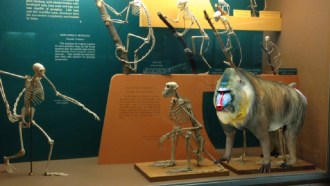
Museum app fleshes out old bones
Museum app breathes life into skeletons. But it will need more funding to make it shine.
- Health & Medicine
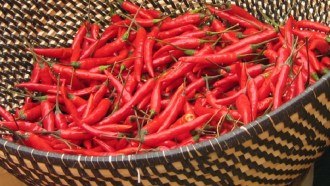
How hot peppers can soothe pain
Peppers can burn the tongue, but soothe sore tissues. Scientists have now sleuthed out how, and the answer shows a role for stretch sensors on cells.
- Animals
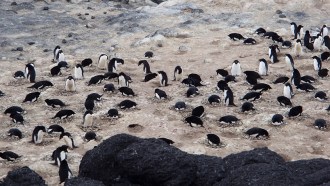
Penguins? How tasteless
Penguins may look all dressed up in tuxedo-wear, but their taste buds are the bare minimum. This means that the birds will never sense more than a hint of their meals’ true flavors.
- Brain
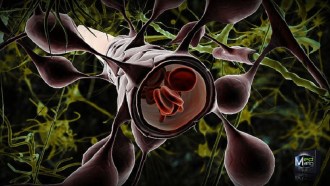
Scientists Say: Blood-brain barrier
Blood can contain nasty bacteria and other things you want to keep away from your delicate brain. The blood-brain barrier is up to the job.
- Animals
Eyelashes: The ‘sweet’ length
New mathematical and aerodynamics studies find what seems to be the optimal length for eyelashes — the length that protects best. And surprise: Longer is not always better.
- Climate
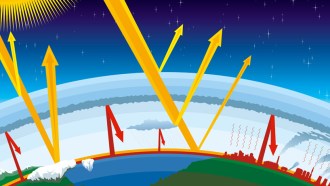
Scientists confirm ‘greenhouse’ effect of human’s CO2
Government scientists link directly, for the first time, a boost in warming at Earth’s surface to increasing levels of carbon dioxide. Much of that gas has been released by human activities, such as coal burning and gas-burning vehicles.
- Genetics
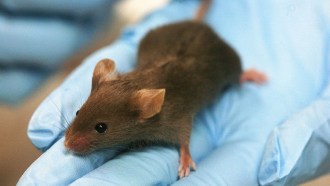
Mice can teach us about human disease
Humans and mice look and act very differently. But 85 to 90 percent of their genes are the same or quite similar. So an international group of scientists is deciphering the instructions in mouse genes to help us better understand our own.
-
Popping my own corny experiment
Popcorn pops at 180 °C, according to a study, but that was corn popped in an oven. What happens if you try to confirm this on a stove top?
- Animals
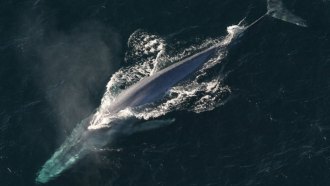
Ocean animals have mushroomed in size
Compared to a half-billion year ago, sea creatures are, on average, roughly 150 times bigger, a new study finds.
- Health & Medicine
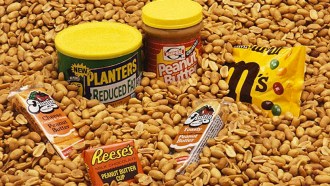
Peanuts for baby: A way to avoid peanut allergy?
Making peanut products a baby food could head off life-threatening peanut allergies later, new data show.
- Animals
Cats and foxes are eating up Australia’s mammals
Since the arrival of Europeans in Australia, a startling number of mammal species have disappeared. A new study puts much of the blame on cats and foxes introduced by the early settlers.
- Psychology
Scientists Say: Pareidolia
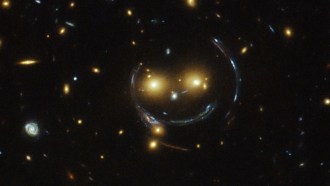
We often see things that aren’t there, such as bunnies in clouds or faces in toast. They aren’t real, but they do have a special name