All Stories
- Chemistry
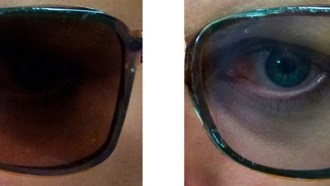
Sunglasses on demand
Plastics that conduct electricity let new color-changing sunglasses go from dark to light and back again at the tap of a switch. The shades could come in a range of colors too.
- Health & Medicine
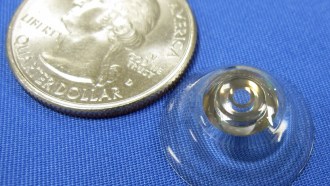
Vision-ary high tech
New devices are being developed to improve, restore or preserve the vision of people with eye diseases, such as glaucoma and macular degeneration. One device is a telescopic contact lens than can be zoomed with a wink.
- Physics
How popcorn got its pop
Popcorn is a popular treat. Now, scientists have learned exactly what happens as it pops. They also have come up with an experiment they hope you will try.
- Health & Medicine
The steady creep of less sleep
More than half of all teens 15 and older get less than seven hours of sleep, according to a new study. That is two to three hours less than recommended. Overall, teens are sleeping less with each passing year, data show.
- Chemistry
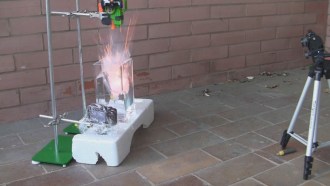
Why metals have a blast in water
Alkali metals explode in water. Using high-speed cameras, scientists have finally figured out why.
- Computing
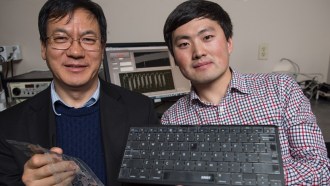
This ‘smart’ self-cleaning keyboard is powered by you
A new electric keyboard locks out anybody but its owner. It’s not only self-cleaning but also powered by your fingertips.
- Health & Medicine
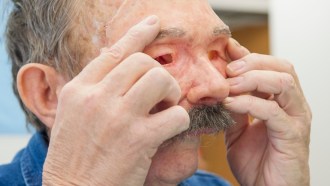
When a part makes you whole
New technologies allow medical experts to create remarkably detailed artificial faces. They can help restore the appearance — and the confidence and self-esteem — of patients who have suffered a disfiguring injury or disease.
- Life
Scientists Say: Parthenogenesis
When a baby frog develops from an egg that’s never been fertilized, we call that parthenogenesis.
- Brain
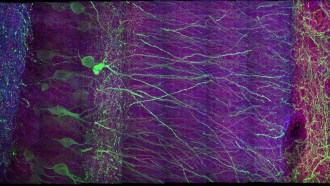
Blowing up the brain
When added to brain tissue, a chemical like one found in baby diapers expands. And it expands that brain tissue too, giving scientists a better view of how its cells connect.
- Health & Medicine
Skip the soft drinks, period
Beyond the quest for trim waistlines and cavity-free teeth, girls have another reason to shun sodas and other sweetened drinks. These beverages may help launch the body’s menstrual cycles at an earlier age.
-
These drones are for the birds
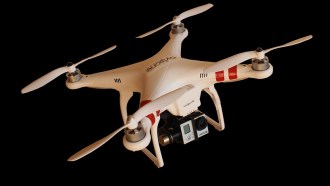
Flying robots represent a great opportunity to observe wildlife. But if scientists want animals to behave naturally, they need to know close we can get before they disturb wild creatures. For that, researchers will need an experiment.
- Health & Medicine
Teens exhibit a zeal to heal
Broadcom MASTERS is the premier middle school science and engineering competition. Several 2014 finalists showed a flair for biomedicine. These young researchers tackled everything from diagnosing cancer early to alerting drowsy drivers before they fall asleep at the wheel.