Scientists Say
A weekly word defined, in a sentence and in context. Click here to find the alphabetized list.
- Microbes
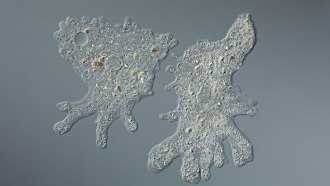
Scientists Say: Amoeba
Amoebas are single-celled microbes that move and eat with shape-shifting bulges that extend from their cells. Some are blobs. Others build a shell.
- Earth
Scientists Say: Jurassic
During this time from about 200 million to 145 million years ago, dinosaurs reigned and many animals evolved, including birds and some early mammals.
- Animals
Scientists Say: Echolocation
This word describes a method that some animals use to sense their environments by making sounds and listening for their echoes.
- Earth
Scientists Say: Ring of Fire
This horseshoe-shaped path on the fringes of the Pacific Ocean holds most of the world’s active volcanos and earthquake sites.
- Physics
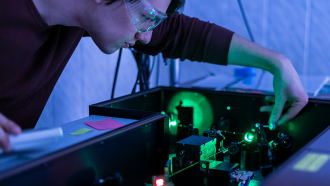
Scientists Say: Photon
This word describes light as a particle. A photon is the tiniest possible bit of electromagnetic radiation.
- Chemistry
Scientists Say: Enzyme
This word describes a molecule that speeds up chemical reactions in living things. Enzymes work by lowering the energy needed for a reaction to occur.
- Brain
Scientists Say: Brainwaves
These patterns of electrical activity in the brain look like spikes or waves.
- Climate
Scientists Say: Meteorology
This word describes the study of processes in the Earth’s atmosphere, including the weather.
- Space
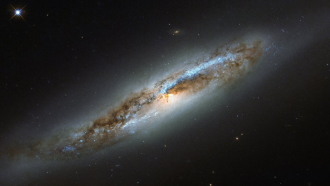
Scientists Say: Light-year
This is the distance light travels in one year — about 9.48 trillion kilometers. Light-years are used to measure vast distances, like those in space.
- Chemistry
Scientists Say: Fermentation
Fermentation breaks down carbohydrates, such as sugars, producing energy and making gases, acids or alcohol. This process can help make foods and fuels.
- Earth
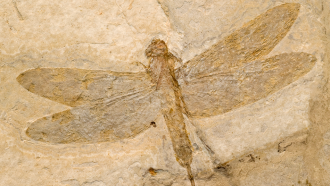
Scientists Say: Fossil
Under the right conditions, living things or traces they’ve left behind can be preserved in rock for a long time — millions or billions of years.
- Planets
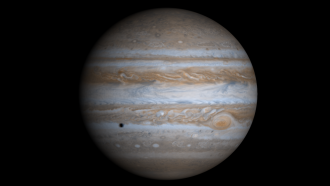
Scientists Say: Gas giant
These gargantuan planets, such as Jupiter and Saturn, are mostly made up of hydrogen and helium gas.