Scientists Say
A weekly word defined, in a sentence and in context. Click here to find the alphabetized list.
- Climate
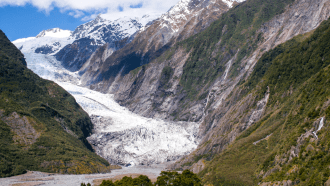
Scientists Say: Glacier
Glaciers are massive ‘rivers of ice’ that move slowly over land. But climate change is shrinking them.
- Health & Medicine
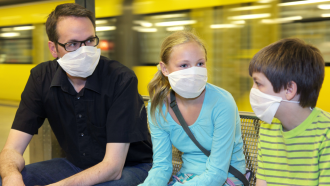
Scientists Say: Outbreak, Epidemic and Pandemic
These terms can describe what is happening as a disease spreads across communities, countries and the world.
- Physics
Scientists Say: Decibel
A decibel is a unit of measurement that describes a sound’s volume. It’s used for sounds that are in the range of human hearing.
- Earth
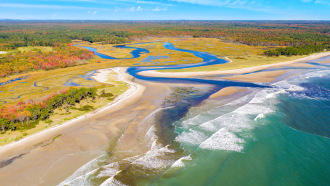
Scientists Say: Estuary
This is where a freshwater river meets a salty sea. This environment has brackish water, a mix of saltwater and freshwater.
- Physics
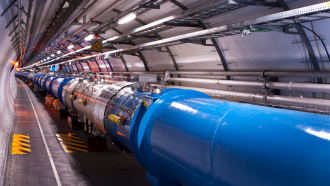
Scientists Say: Quark
These subatomic particles are the building blocks of bigger particles, including the protons and neutrons found in an atom’s nucleus.
-
- Earth
Scientists Say: Firewhirl and Firenado
Firewhirls are smallish vortices of ash and flame; firenadoes are true twisters set off by the conditions that come with a wildfire.
- Environment
Scientists Say: Nutrient
Nutrients provide living things, from bacteria to animals, with the energy and materials to grow. But too much of a nutrient can sometimes cause harm.
- Animals
Scientists Say: Papillae
These small nubs stick out from a body part. They include things such as tongue bumps with taste buds and the structures under the skin that help grow hair.
-
Scientists Say: Octopod
These marine animals have soft bodies and eight sucker-lined arms. Some are known for their smarts or ability to quickly change colors.
- Physics
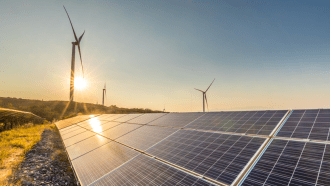
Scientists Say: Power
This word describes the rate at which energy is delivered or used to do work, along with related ideas, such as ways of making electricity.
- Animals
Scientists Say: Species
This word describes organisms grouped by their similarities in genetics and physical traits. But defining species can be tricky.