Scientists Say
A weekly word defined, in a sentence and in context. Click here to find the alphabetized list.
- Space
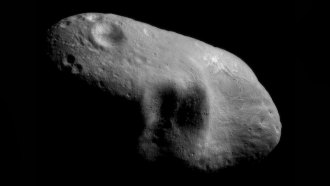
Scientists Say: Asteroid, meteor and meteorite
Asteroids, meteors and meteorites are all space rocks. But one is in orbit, another is in the atmosphere and the third is on the ground on Earth.
- Health & Medicine
Scientists Say: Vaccine
Vaccines help the body develop immunity to a disease. They are biological mixtures that imitate a disease so the body can defend itself.
- Agriculture
Scientists Say: Carbohydrate
Carbohydrates are molecules with carbon, oxygen and hydrogen. Animals break down these chemicals in food to get energy.
- Climate
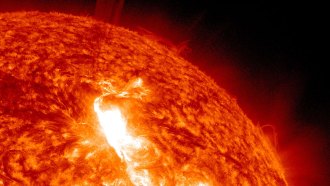
Scientists Say: Solar
What do solar energy, the solar year and solar flares have in common? They’re all related to the sun.
- Archaeology
Scientists Say: Archaeology
People leave things where they’ve been — old buildings, trash heaps and human skeletons. Archaeology is the study of those left-behind things.
- Climate
Scientists Say: Deforestation
Trees slurp up carbon dioxide and help keep our planet cool. But deforestation cuts those trees down in large numbers.
- Physics
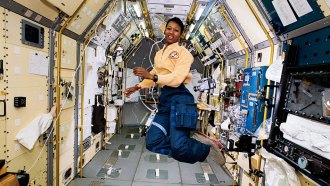
Scientists Say: Microgravity
Gravity is a force that brings objects together. But when those objects get far away, the force feels small. It feels like microgravity.
-
- Agriculture
Scientists Say: Prairie
Prairies are flat, fertile grasslands in North America. They are their own unique ecosystem.
- Space
Scientists Say: GPS
A GPS system relies on satellites orbiting the planet, constantly sending signals back to receivers on Earth.
- Chemistry
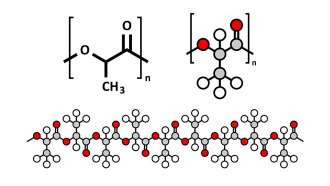
Scientists Say: Polymer
Polymers can be natural or man-made, but they are all big molecules made up of smaller units linked together.
- Life
Scientists Say: Excretion
Every living thing produces waste. Excretion is how organisms take out the trash.