Scientists Say
A weekly word defined, in a sentence and in context. Click here to find the alphabetized list.
- Climate
Scientists Say: Deforestation
Trees slurp up carbon dioxide and help keep our planet cool. But deforestation cuts those trees down in large numbers.
- Physics
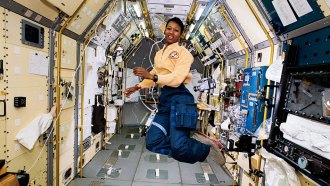
Scientists Say: Microgravity
Gravity is a force that brings objects together. But when those objects get far away, the force feels small. It feels like microgravity.
-
- Agriculture
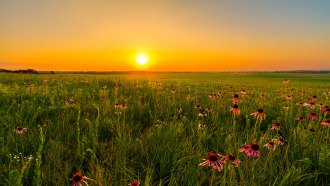
Scientists Say: Prairie
Prairies are flat, fertile grasslands in North America. They are their own unique ecosystem.
- Space
Scientists Say: GPS
A GPS system relies on satellites orbiting the planet, constantly sending signals back to receivers on Earth.
- Chemistry
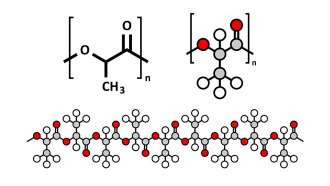
Scientists Say: Polymer
Polymers can be natural or man-made, but they are all big molecules made up of smaller units linked together.
- Life
Scientists Say: Excretion
Every living thing produces waste. Excretion is how organisms take out the trash.
- Earth
Scientists Say: Tsunami
This is a series of ocean waves triggered by an underwater earthquake or volcano. The event starts as small waves, but those waves can grow as they approach land.
- Physics
Scientists Say: Spaghettification
Black holes cram a lot of mass into a small area. When another object gets close, the black hole’s gravity can stretch it into a noodle-like strand.
- Health & Medicine
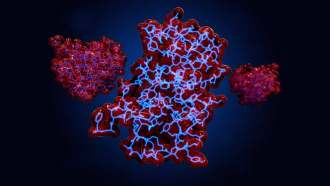
Scientists Say: Protein
Proteins are molecules made up of building blocks called amino acids. They play many key roles in the body’s cells and are essential for life.
- Physics
Scientists Say: Momentum
This word describes a property of a moving object based on its mass and the direction and speed of its motion.
- Space
Scientists Say: Quasar
This word describes the bright-shining core of a galaxy in which a supermassive black hole sucks in matter and releases a huge amount of energy.