Uncategorized
- Genetics
Genes may predict how well the flu vaccine will work in young people
The activity of nine genes predicted how well people 35 and under would respond to the flu vaccine.
- Earth
Expedition finds South Pacific plastic patch bigger than India
A giant, floating ‘garbage patch’ in the South Pacific off Chile’s coast is mostly tiny bits of plastic.
- Physics
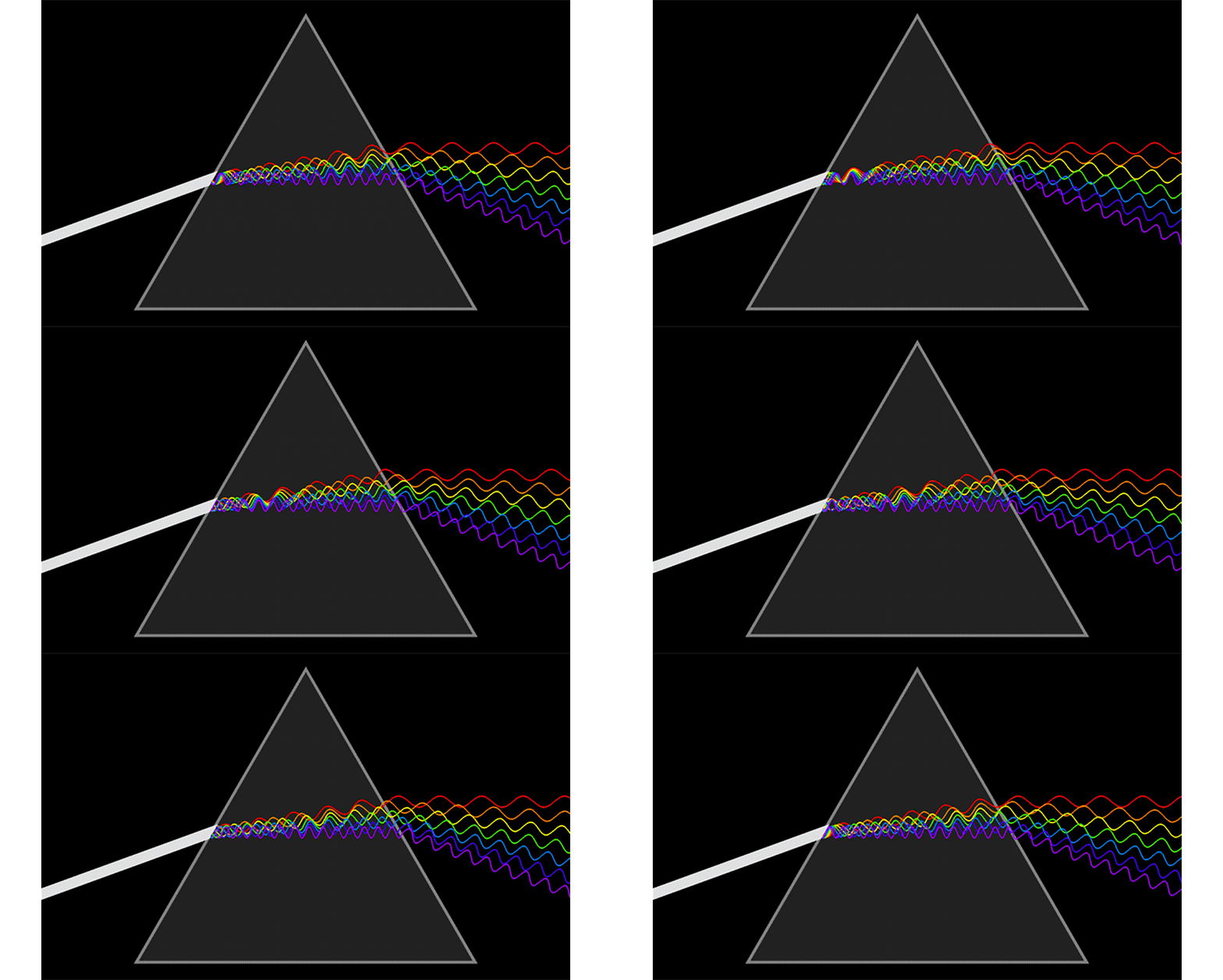
Scientists Say: Refraction
Light or sound may bend as it travels from one medium, such as air, to another, such as water. This bending is called refraction.
- Health & Medicine
Tiny spongelike machines sop up blood sugar
Diabetes disrupts the body’s ability to control blood sugar levels. So researchers invented a tiny plastic machine that could do the job.
- Science & Society
In an era of fake news, students must act like journalists
In an era when the library may be about the last place students go to do research, news literacy — knowing how to vet sources and check facts — is becoming more important for kids than ever.
- Science & Society
Fake news: How not to fall for it
Schools don’t always teach kids how to tell fact from fiction on the internet. But news literacy is more important now than ever.
- Psychology
Warnings may help flag fake news, but they also backfire
Warning that a news story may be false can help people avoid being duped by hoaxes — but not as much as you might think, according to a new study.
- Physics
The Milky Way galaxy houses 100 million black holes
Astronomers are estimating the number of black holes in galaxies of all sizes.
- Brain
Spying on brains in action
New tools let scientists see inside the brain and nervous system as their research subjects move around.
- Animals
Light pollution can foil plant-insect hookups
An experiment in remote European meadows shows that light pollution at night can affect the pollination of flowers — even into sunlight hours.
- Climate
Scientists Say: Weather bomb
Weather doesn’t just affect the air. Huge storms can send waves of pressure through the Earth as well.
- Climate
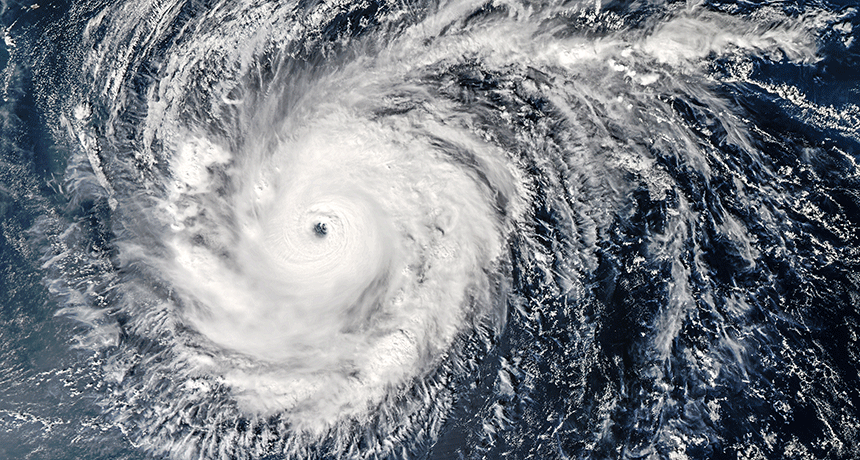
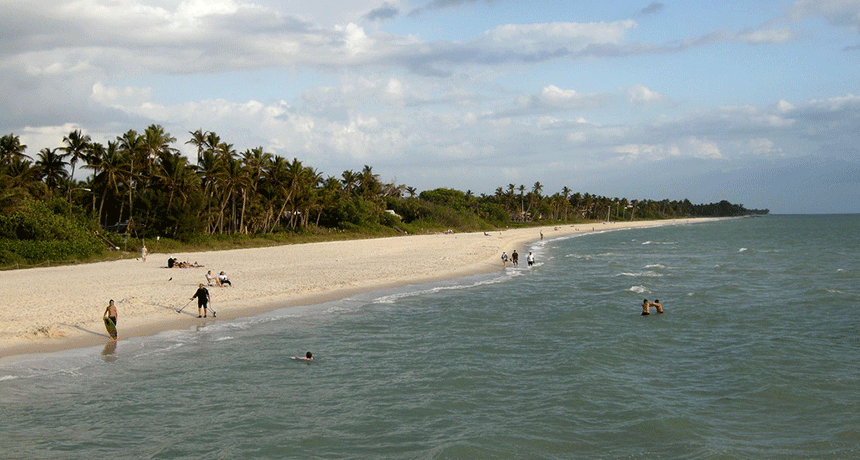
Here’s why Irma caused some coastal water to temporarily go missing
The first sign of an impending storm surge — and serious danger — may be the sudden, wholesale retreat of water from coastal beaches.