Uncategorized
- Animals
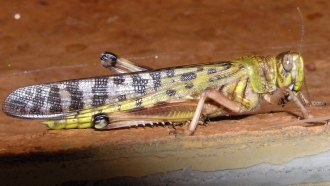
Insects can patch their broken ‘bones’
When insects suffer wounds, they can mend their ‘skeleton’ with a patch on the inside. This makes the leg strong again, new data show.
- Life
Scientists Say: Strain
These are organisms that belong to the same species, but have definable differences.
- Fossils
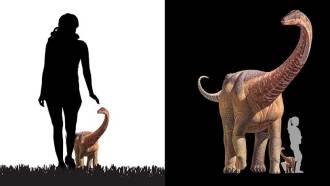
Baby titanosaur was a mini version of its parents
Fossils show that baby titanosaurs looked like mom and dad. They may have been active and independent from a young age.
- Physics
Possibility of strange new particle surprises physicists
Last winter, physicists at the Large Hadron Collider detected hints of a particle beyond their wildest dreams. Soon they may learn if it’s real.
- Health & Medicine
The cool science of hot peppers
Why are chili peppers spicy? Why does anyone crave food that burns? Uncovering this fiery veggie’s secrets could help fight pain and obesity.
- Computing
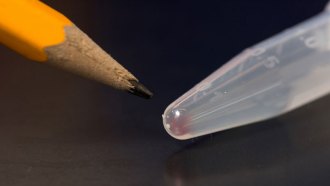
DNA can now store images, video and other types of data
Tiny test tubes might one day replace sprawling data-storage centers, thanks to a new way to encode and retrieve information on strands of synthetic DNA.
- Health & Medicine
Teachers make time for Ebola and other current events
Science teachers want to cover current science and health topics, but struggle to find good resources for their students.
- Brain
Headed to a concert this summer? Pack earplugs
Wearing earplugs at concerts and other loud events may prevent hearing loss and permanent ear damage, a new study suggests.
- Brain
Explainer: When loud becomes dangerous
Many people don’t realize that sounds — even those of the music they love — can prove harmful when they get too loud.
- Life
Scientists Say: Vector
Vectors are used to transfer things. Sometimes the transferred item is a disease, but scientists can also use vectors to insert helpful genes.
- Chemistry
Key sugar for life on Earth could have formed in space
Ribose, a sugar in RNA, may have formed in space and then rained down on a young Earth, a new study suggests.
- Chemistry
Dwarf galaxy spawned heavy elements
A study of nine stars in the dwarf galaxy Reticulum II found heavy elements. They had been produced after a violent stellar event sparked a chemical chain reaction.