Uncategorized
- Animals
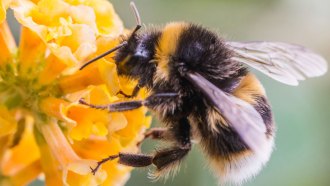
Pollen can become bee ‘junk food’ as CO2 rises
Increasing levels of the greenhouse gas are changing diminishing the food value of pollen, bees’ only source of protein.
- Health & Medicine
Teen vaping soars past cigarette use
Most U.S. states ban sales of e-cigarette products to kids. Still, new data show that it’s no sweat for tweens and teens to buy them online.
- Ecosystems
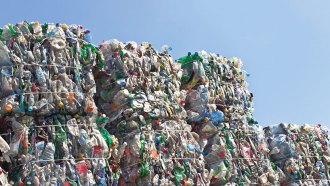
This microbe thinks plastic is dinner
The bacterium Ideonella sakaiensis chows down on one type of polluting plastics. That means it could become helpful in cleaning up environmental waste.
- Materials Science
How to make window ‘glass’ from wood
Scientists have come up with a way to make wood transparent. The new material could be used in everything from windows to packaging.
- Health & Medicine
Teen girls start drinking earlier than boys
Teen girls now tend to take up drinking alcohol earlier than do boys, data show. Drinking-prevention programs, however, tend to focus on boys.
- Physics
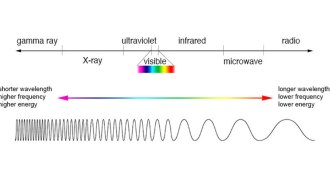
Scientists Say: Frequency
The distance between one wave peak and another is wavelength. But how fast those peaks are moving along is frequency.
- Space
Hurricane at this galaxy’s center is wicked fast
The gale-force winds around one quasar whip by at almost 200 million kilometers per hour. That’s 625,000 times faster than the strongest hurricanes on Earth.
- Materials Science
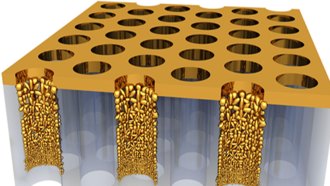
Sunlight + gold = steaming water (no boiling needed)
Nano-gold is the new black, at least when it comes to absorbing heat. When tiny gold particles get together, they become energy super-absorbers — turning them black.
- Earth
Cool Jobs: Mapping the unknown
Scientists find different ways of exploring places humans will never visit — and drawing maps to help us better understand such mysterious places.
- Earth
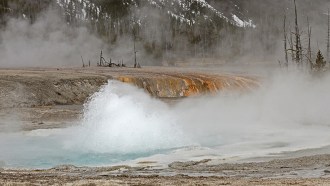
Carbon dioxide could explain how geysers spout
A new study overturns 150 years of thinking about Yellowstone’s geysers. Carbon dioxide, not just hot water, may be driving those spectacular eruptions.
- Tech
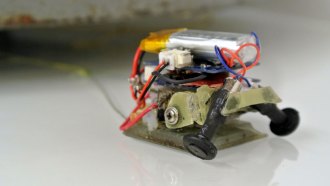
Tiny microrobots team up and move full-size car
Researchers have just created robots that mimic the ability of ants to move super-large objects.
- Physics
Scientists Say: Yottawatt
On Earth, scientists measure energy use in watts. When you have lot of those watts — one million billion billion — you have a yottawatt.