Uncategorized
- Genetics
Newfound DNA ‘enhancer’ behind many natural blonds
Some snippets of DNA other than genes play a role in giving some people of European a golden crown of hair.
- Tech
Digital displays get flexible
Flexible and unbreakable digital displays could soon be for sale, thanks to a new organic transistor made from plastic.
- Animals
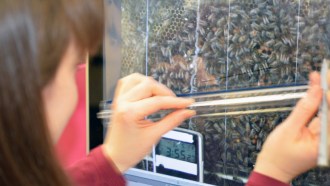
Decoding bee dances
Biologists have started eavesdropping on bees — or their dancing sign language — to identify where these buzzers prefer to forage. This info is pointing to which bee-friendly habitats may be most important to preserve.
- Tech
Digital lighting goes organic
An environmentally friendly lighting technology promises not only to save energy but also to transform our indoor environment.
- Space
Sun sibling spotted
Separated at birth: Astronomers find a star 110 light-years away. It was born at the same time as our sun and from the same cloud of gas and dust.
- Animals
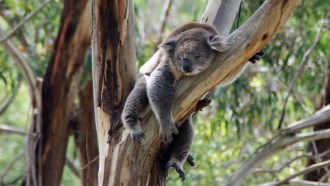
Trees: Koala air conditioning
When koalas sprawl over a tree branch, they may not be lazy. They just might be taking advantage of some natural cooling — enough to survive a heat wave.
-
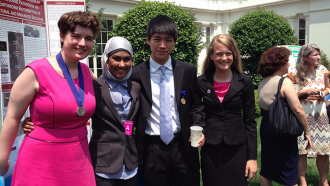
Science stars are on display at the White House
One hundred students from 30 states participated in the fourth annual White House Science Fair in Washington, D.C.
- Climate
This umbrella ‘listens’ to rain — for science
Scientists have developed an umbrella that ‘listens’ to falling raindrops. One day, a fleet of such simple rain gauges may help scientists better map weather patterns and changes in Earth’s water supplies.
- Planets
Distant planet may boast the longest year
On a planet far, far away, a single pass around its sun may seem to last forever.
- Earth
Nifty science
Inspired research put select high school seniors on the path to the 2014 Intel Science Talent Search finals.
- Earth
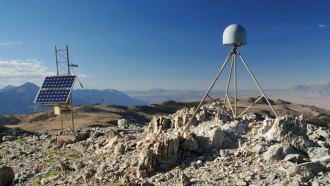
Thirst for water moves and shakes California
Here’s a scary cost to pumping up groundwater to slake the thirst of crops in California’s Central Valley: It may uplift nearby mountains and trigger tiny earthquakes, experts find.
- Animals
Mosquitoes, be gone!
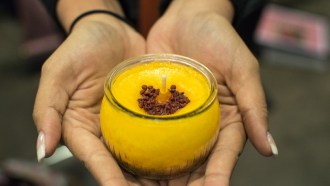
An extract of local seeds in Puerto Rico may be the key to keeping mosquitoes away. It kills the larval insects and repels the biting adults.