Uncategorized
- Physics
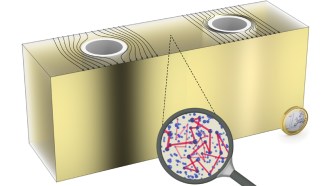
Hazing: How to hide in nearly plain sight
A new system takes advantage of a translucent fog of particles to hide otherwise obvious objects.
- Animals
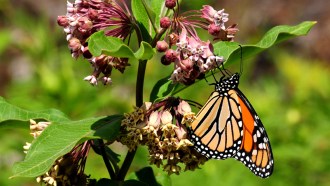
Salted butterflies
The salt used on winter ice can alter the bodies of summer's butterflies. Males develop larger muscles and females get bigger brains.
- Brain
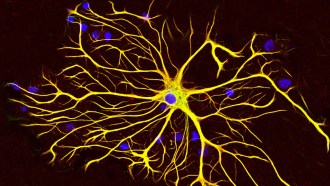
Hunger’s little helpers
Astrocytes were thought to be nothing more than support cells for neighboring nerve cells. A new study suggests they do much more. These brain cells may help control appetite, too.
- Space
Monster collision in space
The smashup of four clusters of galaxies has sent a super-hot jet of charged particles spewing 2.5 million light-years into space!
- Fossils
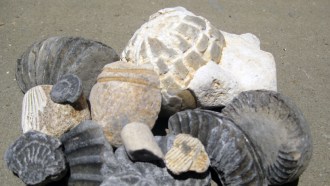
Fossil hunting can start as child’s play
Paleontology isn’t just for professionals. You don’t even need to be a teen to sometimes make startling — and scientifically important — contributions.
- Fossils
Explainer: How a fossil forms
Minerals can replace any bone, shell or once-living tissue and also fill in the spaces between these hard parts, birthing a fossil.
- Environment
Seeing red: North’s CO2 hits new peak
CO2 values are now 50 percent higher than before the Industrial Revolution.
- Planets
First mega-Earth found
Astronomers are puzzled by Kepler-10c. This exoplanet is rocky like Earth — but as massive as Neptune. And that challenges their accepted ideas about how planets form.
- Animals
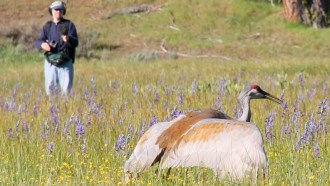
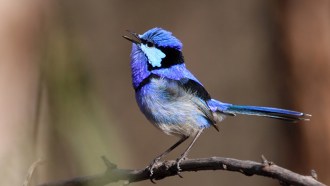
A library with no books
The Macaulay Library at Cornell University has no books. Instead, the audio library has been accumulating sound recordings since 1929.
- Animals
A library of tweets (and howls and grunts)
The Macaulay Library houses a world of animal sounds. And now anyone with an Internet connection can check out this audio collection.
- Environment
Native ‘snot’
The ‘rock snot’ choking rivers may be native algae. Experts blame its sudden and dramatic emergence on changes in Earth’s atmosphere, soils and climate.
- Fossils
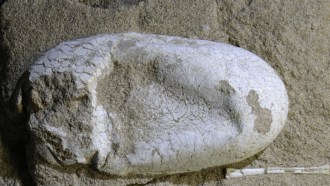
These prehistoric fliers likely nested together
Fossils in nest of newfound pterosaur species suggest these animals were part of a social network — and may even have lived communally.