Uncategorized
- Earth
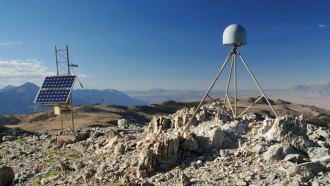
Thirst for water moves and shakes California
Here’s a scary cost to pumping up groundwater to slake the thirst of crops in California’s Central Valley: It may uplift nearby mountains and trigger tiny earthquakes, experts find.
- Animals
Mosquitoes, be gone!
An extract of local seeds in Puerto Rico may be the key to keeping mosquitoes away. It kills the larval insects and repels the biting adults.
- Brain
Football hits the brain hard
The brain’s hippocampus helps store memories. It is smaller in college football players — especially if they have suffered concussions.
- Tech
Saving vanishing ‘tongues’
More than 3,000 world languages face extinction. Linguists are turning to mobile apps and other tech tools to preserve these endangered languages.
- Microbes
Convincing bacteria they’re alone
Caffeine may be the trick to confusing some bacteria into thinking they’ve not yet summoned enough troops to launch a successful attack on their host. It could prove an alternative to antibiotics for certain infections.
-
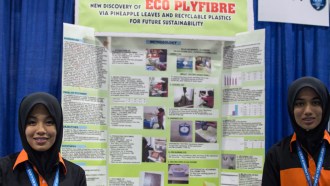
Better than plywood
Most people think of pineapple as a tasty fruit. But it can be so much more, two Malaysian teens showed. They turned the plant’s leaves into a construction material that’s both strong and waterproof.
- Earth
Don’t let the bedbugs bite
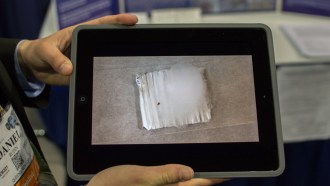
A trio of teens has found a nontoxic way to stop bedbugs dead in their tracks. The method relies on a mesh of fibers that a bug can step into easily — but never leave.
- Animals
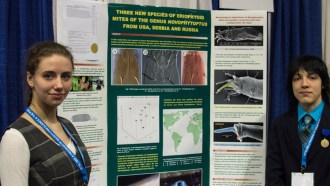
Mite-y discoveries!
Two teens from Russia discovered tiny mites living inside grass-like plants called rushes. Three of the species they turned up are new to science.
- Animals
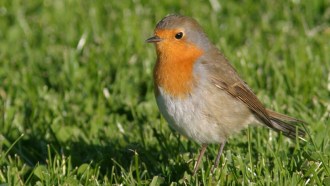
Electronics may confuse a bird’s ‘compass’
Birds use Earth’s magnetic field to help guide them as they migrate. A new study suggests that electromagnetic radiation given off by some electronic devices may act like “noise” and confuse the long-traveling birds.
- Animals
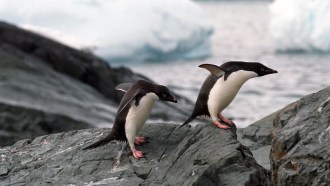
Even penguins get the flu
Scientists have just identified ‘live’ bird flu virus in Antarctic penguins. But the infections may not be novel. There are some signs these germs have been infecting local wildlife for up to 80 years.
- Science & Society
Teen’s cancer research scores big at Intel ISEF competition
Seventeen teens grabbed top honors at the world’s premier high-school science competition. A 15-year old cancer researcher got to take home $75,000.
- Animals
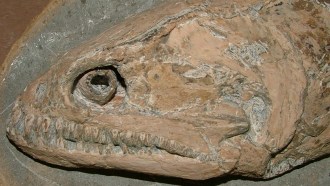
Surprise! Fossils in a flash
By studying how dead tissues decay — or turn to ‘instant’ fossils — scientists are gleaning helpful clues to what ancient life looked like.